
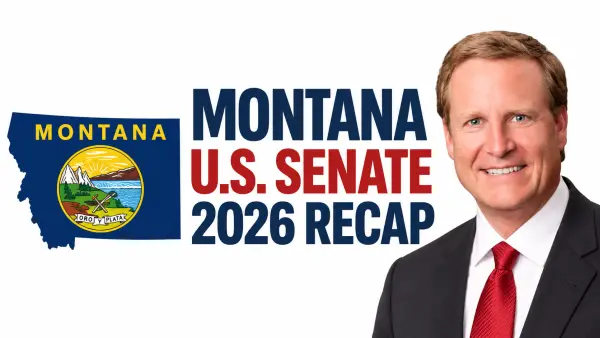
This recap reflects reporting available as of Nov. 21, 2026. Vote figures are the latest reported counts and may differ slightly from certified totals. For the race as it looked two weeks before Election Day, see our Montana Senate election briefing.
The Result
Republican Kurt Alme won Montana’s open Senate seat on Nov. 3, finishing with about 48 percent of the vote. Independent Seth Bodnar took about 38 percent, Democrat Alani Bankhead about 12 percent and Libertarian Kyle Austin about 2 percent, according to AP returns with most votes counted. The AP called the race at 2:54 a.m. Eastern time. Alme succeeds Sen. Steve Daines, whose last-minute withdrawal in March made this Montana’s first Senate election without an incumbent in 40 years.
Alme won without a majority. Bodnar and Bankhead together drew roughly half the vote, which is why the result immediately set off a debate among Montana Democrats about the split.
How the Campaign Unfolded
Our briefing was published on Oct. 21, less than two weeks before the election, and its central question was whether Democratic voters would leave Bankhead for Bodnar in the final stretch. Pressure on Bankhead intensified. A group of 22 Democratic state legislators urged her to withdraw, and Pete Buttigieg endorsed Bodnar. Bankhead stayed in the race, as she had through months of similar appeals, including from former Sens. Max Baucus and Jon Tester.
In debate, Bodnar accused Alme of offering a blank check for the war with Iran and alleged that the Republican primary had been rigged. Alme, who had kept a low campaign profile, campaigned on affordability, public safety and the support of Trump, Daines and Gov. Greg Gianforte. Bodnar outraised him, $4.9 million to $3 million, while outside groups spent about $2 million attacking Bodnar.
Why Voters Chose Alme
Detailed voter data is thinner here than in the other Senate recaps. The ABC News Voter Poll for Montana does not break out the three-way vote by group, so it cannot show how Democrats divided between Bodnar and Bankhead. What it does show is an electorate far friendlier to Trump than in most battlegrounds: 48 percent approved of his job performance and 52 percent disapproved, compared with roughly 60 percent disapproval in states like Georgia and New Hampshire. Immigration was the top issue for 19 percent of voters, and 46 percent called themselves conservative.
In that environment, Alme did not need to win over many skeptics. He needed the opposition divided, and it was.
Expectations vs. Outcome
- Polling average: A Legis1 average in late October had Alme at 41 percent, Bodnar at 31 percent and Bankhead at 17 percent. The 10-point gap between Alme and Bodnar matched the result almost exactly.
- Where polls missed: Bankhead finished about 5 points below her polling average and Bodnar about 7 points above his. Some Democrats did move to Bodnar late, just not enough.
- The outlier: A Concord Public Opinion Partners memo in October showed Bodnar ahead, 37 to 35. Alme’s campaign called it an outlier, and the result bore that out.
- Forecasters and markets: None of the major forecasters rated the race competitive, and Kalshi priced Alme at about 91 percent.
Our briefing framed Bodnar’s path as consolidation: Democratic voters had to leave Bankhead in large numbers. That framing held up, and the answer was partial consolidation. Whether a full consolidation would have elected Bodnar is not knowable from the results. Bodnar and Bankhead’s combined share was close to Alme’s, and not every Bankhead voter would have backed an independent who promised not to caucus with Democrats.
Montana analysts drew different lessons the week after. University of Montana political scientist Lee Banville said Bodnar overperformed and proved he could raise money, while Kal Munis faulted the party’s old guard and said Bodnar’s supporters never closed the Democratic lane. Democrat Nancy Keenan called Bankhead a spoiler, while Bankhead’s campaign noted that prominent Democrats backed independents over Democratic nominees in four states this year, according to the Daily Montanan, and that all four lost.
Victory and Concession
Bodnar conceded just before midnight. “This isn’t the result we worked so hard for,” he said, adding that he was proud of what his campaign had built. Alme declared victory in a statement, promising to fight to make life more affordable, make communities safer and protect what he called the Montana way of life. Bankhead congratulated Alme in a statement the next day.
- Alme declares victory, Bodnar concedes (Daily Montanan, article)
- Bankhead congratulates Alme (Daily Montanan, article)
What’s Next for Both Candidates
Current as of Nov. 21, 2026.
Alme, a former U.S. attorney in his first run for office, will be sworn in with the new Congress in January. Tester called the year a missed opportunity for Montana Democrats, and Banville suggested the party must either keep backing independents or rebuild itself to welcome them. This article could not find any public statement from Bodnar or Bankhead about their next plans.
