
What Happened
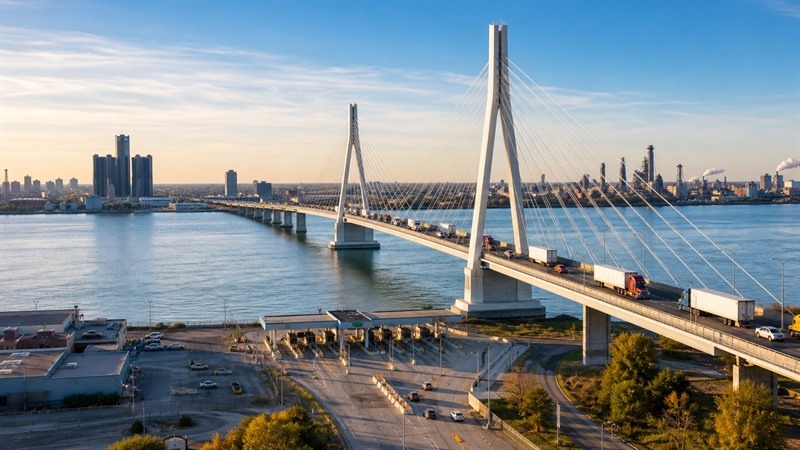
The Gordie Howe International Bridge opened to passenger and commercial traffic on July 27, creating a new connection between Detroit, Michigan, and Windsor, Ontario. Members of hockey legend Gordie Howe’s family were among the first people to cross the bridge.
The opening is a major infrastructure event for two countries with deeply connected economies. It also arrived during a new U.S.-Canada tariff fight. A planned joint celebration was canceled after President Donald Trump announced additional 50 percent tariffs on selected Canadian products.
Michigan Governor Gretchen Whitmer marked the opening by driving across the bridge. Canadian officials held a separate ceremony in Windsor. The disagreement changed the tone of the event, but it did not stop the bridge from opening.
Background
The Windsor-Detroit corridor is one of North America’s most important trade routes. Hundreds of millions of dollars in goods cross the area on a typical day. Automakers and other manufacturers often move parts across the border several times before a finished product reaches a customer.
The new bridge provides a direct highway-to-highway link between Ontario’s Highway 401 and Interstate 75 in Michigan. It is designed to reduce bottlenecks and add another route for trucks and travelers.
The six-lane cable-stayed bridge is about 2.5 kilometers, or 1.6 miles, long. Its 853-meter main span is the longest of its kind in North America. Large customs plazas on both sides are intended to process commercial and passenger traffic. A multi-use path for pedestrians and cyclists is expected to open later.
Who Paid for the Bridge?
Canada and Michigan jointly own the project, but Canada financed the bridge, the border facilities and the Michigan highway connections. Under the original arrangement, Canada expected to recover its investment through toll revenue.
A 2026 agreement changed how some future revenue will be used. For the first 15 fiscal years, half of net bridge and crossing revenue is to support a bilateral economic-development fund controlled on the U.S. side. The agreement also sets a process for consultation on certain toll changes. It does not replace the main 2012 crossing agreement.
Supporters describe the fund as a way to ensure that communities and trade on both sides benefit. Critics in Canada say a country that financed the full project gave up too much revenue to secure the opening.
The Tariff Dispute
On July 20, the White House announced additional 50 percent tariffs on certain Canadian motor vehicles, alcoholic beverages and dairy products. The administration relied on Section 338 of the Tariff Act of 1930, a rarely used provision that allows duties in response to alleged discrimination against U.S. commerce.
The White House says Canadian policies unfairly restrict U.S. products and that the tariffs are meant to restore equal treatment. Canada rejects the broader claim that its trade relationship with the United States is unfair and says tariffs hurt businesses and consumers in both countries.
The new duties were announced before the bridge opened and are scheduled to take effect on August 19. They are separate from the bridge toll agreement, although both disputes reflect the wider tension in the relationship.
What Different Sides Are Saying
Supporters of the Bridge and Cross-Border Trade
Canadian and Michigan officials say the bridge will make supply chains more reliable, support jobs and give travelers another modern border crossing. Whitmer called the project a symbol of partnership and emphasized the importance of Canada to Michigan’s economy.
Business groups and transportation planners have long argued that depending heavily on one aging private bridge creates risk. The new connection adds capacity and a direct freeway route.
Fact-check: The Windsor-Detroit region is a major trade corridor, and the new bridge does create additional capacity and redundancy. The size of future economic gains will depend on traffic, tolls, customs processing and the larger trade relationship. A bridge cannot by itself cancel the effects of tariffs or a recession.
The Trump Administration’s Position
The administration says Canada has benefited from an unbalanced arrangement and maintains trade barriers against U.S. goods. Trump earlier threatened to stop the bridge from opening unless the United States received compensation. The later agreement directed revenue toward a U.S.-controlled development fund and allowed the opening to proceed.
The White House says the new product tariffs respond to discrimination against American commerce, especially in alcohol and dairy markets.
Fact-check: Canada did finance the entire project and expected tolls to repay that investment. The United States and Michigan contributed land, approvals and cooperation but did not finance construction in the same way. The new agreement gives the U.S. side a share of net revenue for 15 years. Whether the original deal was unfair is a political judgment.
Canadian Critics of the New Agreement and Tariffs
Some Canadian critics say their government made an unnecessary concession after paying for the bridge. They also argue that new tariffs will reduce the trade the bridge was built to carry and raise prices for consumers.
Other Canadians take a more practical view: opening the completed bridge creates toll revenue and economic benefits, while leaving it closed would produce neither.
Fact-check: Tariffs are taxes collected by the importing government, usually paid first by importers. Their costs may be absorbed by companies, passed to customers or shared across the supply chain. It is too early to know the full effect of the July tariffs on bridge traffic.
Fact Check
Claim: Canada owns both sides of the border
Verdict: Misleading. Canada and Michigan jointly own the bridge project through the international authority. Canada financed the project and has a strong role in its operation, but U.S. customs, immigration and security laws apply at the American port of entry.
Claim: The United States paid nothing and contributed nothing
Verdict: Half true. Canada provided the project financing, including money for the Michigan interchange. U.S. and Michigan governments contributed land, permits, legal authority, border services and infrastructure coordination. Those contributions are different from financing construction.
Claim: A 50 percent tariff means every Canadian product will cost 50 percent more
Verdict: False. The additional duties apply to selected product categories, not every Canadian good. A tariff is charged on the customs value, and the final retail-price effect depends on how businesses and consumers respond.
Claim: The bridge will eliminate border delays
Verdict: Too strong. More lanes, large inspection plazas and a direct freeway connection can reduce some delays and provide an alternative route. Traffic volume, inspections, staffing, weather and incidents can still cause backups.
Why It Matters
The bridge shows how closely the United States and Canada remain connected even when their governments disagree. Roads, factories and supply chains take years to build, while trade policies can change quickly.
For Michigan and Ontario, the practical test begins now. Officials will watch traffic volume, customs wait times, toll revenue, neighborhood effects and whether businesses change shipping routes. The tariff fight will help determine how much trade crosses the new bridge and how quickly Canada recovers its investment.
Related Links
- Government of Canada: Bridge Opening Announcement
- Government of Canada: Gordie Howe International Bridge Overview
- Canada Border Services Agency: New Port of Entry
- State of Michigan: Opening-Day Statement
- Gordie Howe International Bridge: 2026 Agreement in Principle
- White House: Additional Tariffs on Canada
- Associated Press: Bridge Opens During Trade Tensions
Discussion Questions
- Why is the Windsor-Detroit corridor important to both countries?
- Was it reasonable for Canada to finance the entire project?
- What are the benefits of having more than one major border crossing?
- How might tariffs affect the value of a new trade bridge?
- Was the new revenue-sharing agreement a fair compromise?
- Who usually pays the economic cost of a tariff?
- Which bridge-opening fact is most important for local residents?
- How should governments measure whether the bridge is successful?
- Can long-term infrastructure cooperation survive short-term political conflict?
- Imagine you own a small auto-parts company near Detroit. How would the new bridge and tariffs change your plans?
