
Reading
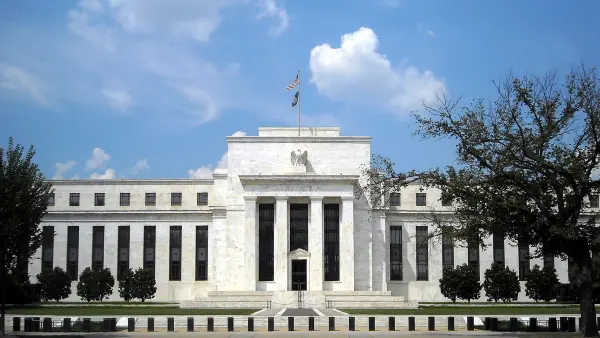
Almost every country has a central bank, an institution that manages the money supply and influences the cost of borrowing. In the United States it is the Federal Reserve, usually called the Fed. Congress created it in 1913, after a series of banking panics had repeatedly frozen the economy.
Note what that means. The Fed is not in the Constitution. It exists because Congress passed a law, and Congress could change that law. This matters for everything that follows, because the argument about the Fed is ultimately an argument about what Congress may set up and what a president may control.
What the Fed does
The Fed conducts monetary policy. Its main lever is the interest rate, the cost of borrowing money. Raising rates tends to slow borrowing, spending, and hiring. Lowering them tends to speed all three up.
Congress gave the Fed two goals, known as the dual mandate: stable prices and maximum employment. Stable prices means keeping inflation, a general rise in prices that reduces what money can buy, low and predictable.
These goals can conflict. If prices are rising quickly, raising rates will usually bring inflation down, but it may also cost people their jobs. If unemployment is high, cutting rates may help, but it may push prices up. Much of what the Fed does is judging that trade-off, and economists disagree about it constantly.
The Fed does not set taxes or decide government spending. Those belong to Congress.
How the Fed is structured
At the center is the Board of Governors, seven members based in Washington. Each is nominated by the president and confirmed by the Senate, like a Cabinet secretary or a judge.
Then the design departs from the ordinary pattern in two ways.
First, the terms are very long. A full term for a governor is fourteen years, longer than any president can serve. The chair holds a separate four-year term in that role while also holding a governor’s seat.
Second, the terms are staggered, so that one seat expires every two years. The purpose is straightforward: no single president can replace the whole board at once. Reshaping the Fed is meant to take longer than a presidency.
For-cause removal
Most executive branch officials serve at the president’s pleasure and can be dismissed for any reason. Fed governors have a for cause protection, meaning removal requires a specific reason rather than none.
This sits between two poles. It is not lifetime tenure like a federal judge. It is also not at-will employment, where a person can be let go for any reason or none at all. The difference is the whole subject of the current dispute, because a for-cause standard only means something if some reasons are insufficient.
The Supreme Court held in 1935, in Humphrey’s Executor v. United States, that Congress may protect certain officials from at-will removal. That precedent has been narrowed in recent years, and the unitary executive theory, the view that the president must be able to control everyone exercising executive power, holds that such protections are constitutionally suspect. Where the Fed sits in that argument is genuinely unsettled.
The argument for independence
The case for independence rests on a problem of incentives. Cutting interest rates makes borrowing cheaper, which tends to help the economy in the short run and can help an incumbent in an election. The costs, in the form of inflation, arrive later. A government that controlled the money supply directly would face a standing temptation to take the short-run benefit and leave the long-run cost to someone else.
The historical evidence supporters cite is largely non-American. Argentina and Zimbabwe both experienced severe inflation during periods when their central banks financed government spending on political instruction. Turkey’s central bank saw repeated leadership changes after disagreements over interest rates, followed by inflation above 60 percent. Comparative studies of central banks across many countries have generally found that more independent ones are associated with lower average inflation, though the direction of causation is debated.
The argument against
The objection is about democratic accountability, and it is serious. Interest rates affect mortgages, jobs, and prices for everyone. The people setting them are not elected, and voters cannot remove them. If the Fed makes a bad call, the ordinary democratic remedy does not apply.
This objection is not confined to one side of politics. It has been made by progressives who argue the Fed prioritizes controlling inflation over employment, and by conservatives who argue an unelected body should not have this much power. Nor is independence absolute in practice: Congress created the Fed, sets its mandate, and calls its chair to testify.
The live dispute
In August 2025, President Trump announced he was removing Governor Lisa Cook, the first time in the Fed’s history a president had attempted this. The stated basis was a criminal referral from a housing official alleging she made false statements on mortgage applications in 2021, before joining the Fed. A criminal referral is a request that prosecutors consider charges. It is not a charge and not a finding. Cook has denied wrongdoing and has not been charged.
Cook sued. A district judge blocked the removal, and on June 29, 2026 the Supreme Court upheld that block 5 to 4. Chief Justice John Roberts wrote that allowing the removal would in effect transform the Fed’s for-cause protection into at-will employment.
That sentence is the heart of it. If a president can remove a governor by stating a reason without the reason being tested, then the protection is a formality. Roberts was not saying the allegations were false. The Court did not evaluate them. It held that due process required notice of the allegations and an opportunity to respond before removal. Roberts added in a footnote that nothing barred the president from trying again with proper procedure.
The administration took those steps in August 2026. The White House sent Cook a letter on August 5 giving her 21 days to respond. Her lawyers call the allegations a pretext for a disagreement over interest rates. The administration says it is following the process the Court required and argues the conduct shows negligence incompatible with the office even if it is not criminal.
The stakes extend past one seat. Cook’s removal would let the president appoint a fourth board member, a majority of seven.
What is not resolved
Nobody knows what counts as cause, because no court has decided. Nobody knows what procedure satisfies the Court, because it did not specify. And nobody knows whether the 1935 precedent will survive in its current form.
These are open questions about the design of an institution, not merely about one person’s job. That is why an argument that began with two mortgage applications is being followed by economists in other countries.
Glossary
CENTRAL BANK (noun): the institution that manages a country’s money supply and interest rates.
Translations: 中央银行 | 中央銀行 | 중앙은행 | केंद्रीय बैंक | البنك المركزي | центральный банк | banco central | banque centrale
- Almost every country has a central bank of some kind.
- A central bank is not an ordinary government department.
FEDERAL RESERVE (noun): the central bank of the United States, created by Congress in 1913.
Translations: 美国联邦储备系统 | 連邦準備制度 | 미국 연방준비제도 | अमेरिकी संघीय रिजर्व | الاحتياطي الفيدرالي | Федеральная резервная система | Reserva Federal | Réserve fédérale
- The Federal Reserve is often called the Fed.
- Congress created the Federal Reserve after repeated banking panics.
BOARD OF GOVERNORS (noun): the seven-member body in Washington that leads the Federal Reserve system.
Translations: 理事会 | 理事会 | 이사회 | गवर्नर बोर्ड | مجلس المحافظين | совет управляющих | junta de gobernadores | conseil des gouverneurs
- A seat on the Board of Governors requires Senate confirmation.
- The Board of Governors has seven members.
MONETARY POLICY (noun): decisions about interest rates and money supply that influence the wider economy.
Translations: 货币政策 | 金融政策 | 통화정책 | मौद्रिक नीति | السياسة النقدية | денежно-кредитная политика | política monetaria | politique monétaire
- Monetary policy is the main tool a central bank has.
- Monetary policy is separate from taxing and spending.
INFLATION (noun): a general rise in prices that reduces what a unit of money can buy.
Translations: 通货膨胀 | インフレーション | 인플레이션 | मुद्रास्फीति | التضخم | инфляция | inflación | inflation
- The Fed is expected to keep inflation low and steady.
- High inflation means your money buys less than it did.
DUAL MANDATE (noun): the Fed’s legal instruction to pursue both stable prices and maximum employment.
Translations: 双重使命 | 二つの政策目標 | 이중 책무 | दोहरा अधिदेश | التفويض المزدوج | двойной мандат | doble mandato | double mandat
- The dual mandate sometimes points in two directions at once.
- Congress wrote the dual mandate into law.
INDEPENDENCE (noun): the ability of an institution to make decisions without political direction.
Translations: 独立性 | 独立性 | 독립성 | स्वतंत्रता | الاستقلالية | независимость | independencia | indépendance
- Central bank independence is defended as producing better long-run decisions.
- Independence is never absolute, since Congress created the institution.
STAGGERED TERMS (noun): terms that begin and end at different times so no single moment fills every seat.
Translations: 交错任期 | 任期をずらす仕組み | 임기 시차제 | क्रमिक कार्यकाल | ولايات متداخلة زمنياً | сроки полномочий, истекающие поочерёдно | mandatos escalonados | mandats échelonnés
- Staggered terms make it hard for one president to replace an entire board.
- Under staggered terms, one seat expires every two years.
FOR CAUSE (adjective): allowing removal only for specific reasons rather than at will.
Translations: 有正当理由的 | 正当な理由に基づく | 정당한 사유에 의한 | उचित कारण से | لسبب مبرر | при наличии обоснованной причины | por causa justificada | pour motif valable
- A for cause protection separates these officials from ordinary appointees.
- A for cause standard only means something if some reasons are insufficient.
AT-WILL EMPLOYMENT (noun): an arrangement in which a person can be dismissed for any reason or none.
Translations: 任意雇佣 | 随意雇用 | 임의고용 | स्वेच्छिक नियोजन | التوظيف حسب الرغبة | наём с правом увольнения без обоснования | empleo a voluntad | emploi à volonté
- Critics said the removal attempt would turn the position into at-will employment.
- At-will employment is the ordinary rule for most executive officials.
DUE PROCESS (noun): the requirement that fair procedures be followed before someone loses a protected position.
Translations: 正当程序 | 適正手続き | 적법절차 | उचित प्रक्रिया | الإجراءات القانونية الواجبة | надлежащая правовая процедура | debido proceso | procédure régulière
- The Court held that due process required notice and a chance to respond.
- Due process is about how a decision is made, not what it decides.
NOTICE (noun): formal written information telling a person what they are accused of.
Translations: 正式通知 | 正式な告知 | 공식 통지 | औपचारिक सूचना | إشعار رسمي | официальное уведомление | notificación formal | notification formelle
- Notice must come before removal, not after.
- The August letter was intended to provide notice.
UNITARY EXECUTIVE THEORY (noun): the view that the president must be able to control everyone exercising executive power.
Translations: 单一行政权理论 | 単一執行府理論 | 단일 행정부 이론 | एकात्मक कार्यपालिका सिद्धांत | نظرية السلطة التنفيذية الموحدة | теория единой исполнительной власти | teoría del ejecutivo unitario | théorie de l’exécutif unitaire
- Under the unitary executive theory, removal protections are constitutionally suspect.
- The unitary executive theory has gained influence in recent decades.
PRECEDENT (noun): an earlier court decision that guides how later cases are decided.
Translations: 判例 | 判例 | 판례 | पूर्व निर्णय | سابقة قضائية | судебный прецедент | precedente judicial | précédent judiciaire
- The 1935 precedent allowed Congress to protect certain officials from removal.
- A precedent can be narrowed without being overruled.
CRIMINAL REFERRAL (noun): a formal request asking prosecutors to consider charges against someone.
Translations: 刑事移送请求 | 刑事告発の申し立て | 형사 수사 의뢰 | आपराधिक जांच का अनुरोध | إحالة إلى النيابة للنظر في اتهام جنائي | направление материалов прокурорам для решения об обвинении | remisión para consideración penal | signalement au parquet
- A criminal referral is a request, not a charge and not a finding.
- A criminal referral may lead nowhere.
PRETEXT (noun): a stated reason that conceals the real reason for an action.
Translations: 借口 | 口実 | 구실 | बहाना | ذريعة | предлог | pretexto | prétexte
- Her lawyers argue the allegations are a pretext for a policy disagreement.
- Proving something is a pretext requires evidence about motive.
INTEREST RATE (noun): the cost of borrowing money, expressed as a percentage.
Translations: 利率 | 金利 | 금리 | ब्याज दर | سعر الفائدة | процентная ставка | tasa de interés | taux d’intérêt
- Raising the interest rate tends to slow borrowing and spending.
- A change in the interest rate affects mortgages and business loans.
Discussion Questions
- Should the people who set interest rates be elected?
- Is fourteen years too long for anyone to hold an appointed position?
- What reasons should be enough to remove an official with for-cause protection?
- Who should decide whether a stated reason is the real one?
- Why might a country regret letting politicians control its central bank?
- Is the accountability objection to independence a good one?
- Does it matter that the Fed was created by law rather than by the Constitution?
- How does your own country manage its central bank?
- Should conduct from before someone took office count against them?
- What happens to a protection if any stated reason is sufficient?
- Is it a problem that one removal could give a president a board majority?
- Imagine you had to design a central bank from scratch. Who could remove its leaders, and why?
Related Links
- Trump informs Lisa Cook he is considering her removal (SCOTUSblog)
- Trump renews effort to oust Cook from the Fed board (Consumer Finance Monitor, a law firm publication)
- Trump moving forward with attempt to fire Cook (Ground News, which aggregates coverage across the spectrum)
- White House renews its attempt to remove Governor Cook (CNN Business)
- Trump weighing renewed push to fire Lisa Cook (Fox Business)
- Cook says the allegations against her are baseless (Associated Press via PBS)
