
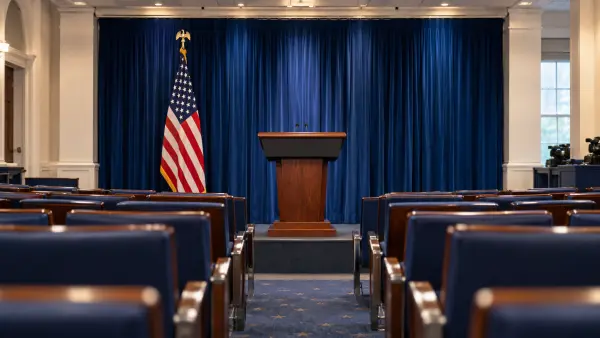
On September 18, 2026, President Trump announced that CNN, MS NOW, and Politico would lose access to the White House. Within two days, Secret Service officers had confiscated three reporters’ credentials at the gate. The outlets sued, arguing the ban breaks both the First Amendment and the Fifth Amendment. Their case revives a question the Constitution never answers outright: how much control does a president have over who covers the White House, and what obligations kick in once that access exists?
The First Amendment bars government from restricting the press, but the Supreme Court has read that protection narrowly. In Branzburg v. Hayes (1972), the Court held that the Constitution does not guarantee reporters “a constitutional right of special access to information not available to the public generally.” Nothing in the text requires a president to hold briefings, issue badges, or maintain a press pool at all.
Once the White House does set up a credentialing system, though, a separate line of cases takes over. In Sherrill v. Knight (1977), a federal appeals court ruled that revoking a reporter’s hard pass without notice, a chance to respond, and a written explanation violates due process under the Fifth Amendment. The court reasoned that once a pass is the ordinary way to cover the presidency, taking one away for an unstated reason harms a reporter’s ability to do their job, which is enough to trigger constitutional protection. That single ruling has anchored nearly every press-access lawsuit filed since.
Access itself is set by norm, not statute. The White House Correspondents’ Association manages the seating chart in the briefing room and helps coordinate the press corps, but nothing forces a president to work with it. For most of the modern era, no administration revoked a reporter’s pass over the substance of their coverage; disputes were rare and usually tied to one reporter’s conduct, not an outlet’s editorial line.
That norm started breaking down in 2018, when the White House suspended CNN correspondent Jim Acosta’s pass after a testy exchange with President Trump. CNN sued, and the same judge now overseeing the 2026 case, Timothy Kelly, granted a temporary restraining order restoring Acosta’s access within days. The White House dropped its case against Acosta shortly after the ruling. A similar dispute followed in 2019, when correspondent Brian Karem’s pass was suspended over a shouting match in the Rose Garden; the D.C. Circuit again sided with the reporter, citing Sherrill as precedent.
Not every case has gone the press’s way. When the Associated Press refused to rename the Gulf of Mexico in its own style guide in 2025, the administration barred its reporters from the Oval Office and Air Force One. A district court called the move likely viewpoint discrimination, but a divided appeals panel later let the restriction on those specific spaces stand while the underlying litigation continues. The AP kept its access to larger, more public events, while only the smaller spaces stayed closed; the wire service has since asked the full appeals court to reconsider, setting up a possible path to the Supreme Court.
The 2026 case is different in scope. Instead of one reporter’s pass, Trump barred three entire outlets, citing years of coverage he calls unfair. CNN, MS NOW, and Politico argue the ban amounts to retaliation and unconstitutional viewpoint discrimination in a nonpublic forum most reporters can only enter by credential. In a court filing this week, the Justice Department countered that “access to the White House is a privilege, not a right,” resting its case partly on professionalism standards and the handling of sensitive information.
The response from other outlets marked its own break from custom. Under the pool system, television networks take turns supplying camera footage to the wider press corps; when the White House pulled CNN from its Monday rotation, the other four networks, Fox News among them, declined to fill in. Their joint statement said no administration should restrict a news organization because it objects to that organization’s reporting, an unusual show of unity in an industry usually split along partisan lines. Days later, reporters covering a White House event said they could not hear the president speak, because the pool microphones that normally carried his remarks were absent.
As of this writing, the reporters and outlets named as plaintiffs, and Trump and his aides named as defendants, were still waiting on Judge Kelly’s ruling on the restraining order; a hearing was set for the afternoon of September 23. If Kelly rules for the outlets, they would still need to win a longer-lasting injunction to keep their access secure while the underlying case proceeds. Trump has said he expects to lose and will appeal. Whatever the outcome, the case will test how far the norm of open access has eroded, and whether courts still enforce the notice-and-response standard Sherrill set nearly fifty years ago.
Glossary
CREDENTIAL (noun): an official badge or pass that proves a person is allowed into a restricted place.
Translations: 证件 | 資格証明書 | 자격증 | प्रमाण पत्र | بطاقة اعتماد | удостоверение | credencial | accréditation
- Each reporter needs a valid credential to pass through the White House gate.
- The agency mailed her a new credential after the old one expired.
FIRST AMENDMENT (proper noun): the part of the U.S. Constitution that protects speech, religion, assembly, and the press from government restriction.
Translations: 第一修正案 | 修正第1条 | 수정헌법 제1조 | प्रथम संशोधन | التعديل الأول | Первая поправка | Primera Enmienda | Premier amendement
- The lawsuit claims the ban violates the First Amendment.
- Lawyers for the outlets argue the First Amendment protects critical coverage of the president.
FIFTH AMENDMENT (proper noun): the constitutional amendment that guarantees due process before the government takes away a right or benefit.
Translations: 第五修正案 | 修正第5条 | 수정헌법 제5조 | पांचवां संशोधन | التعديل الخامس | Пятая поправка | Quinta Enmienda | Cinquième amendement
- The reporters say revoking their passes without warning violated the Fifth Amendment.
- Courts have used the Fifth Amendment to require notice before a credential is taken away.
PRESS POOL (noun): a small rotating group of journalists who cover an event and share their material with the rest of the press corps.
Translations: 联合采访团 | 記者プール | 취재단(풀) | प्रेस पूल | تجمع صحفي | пресс-пул | pool de prensa | pool de presse
- CNN’s turn in the press pool was canceled after the ban took effect.
- Local TV stations depend on press pool footage they cannot film themselves.
DUE PROCESS (noun): the constitutional requirement that the government follow fair procedures, such as notice and a chance to respond, before taking away a right.
Translations: 正当程序 | 適正手続き | 적법 절차 | उचित प्रक्रिया | الإجراءات القانونية الواجبة | надлежащая правовая процедура | debido proceso | procédure régulière
- The court said revoking a pass with no explanation denies a reporter due process.
- The Fifth Amendment guarantees due process before the government cancels a benefit like a hard pass.
NORM (noun): a widely accepted way of doing things that is not written into law.
Translations: 惯例 | 慣行 | 관행 | प्रथा | عرف | норма | norma consuetudinaria | norme
- For decades it was a norm that outlets kept their access regardless of how critical their coverage was.
- Legal scholars debate whether courts can enforce a norm that was never written into law.
BRIEFING ROOM (noun): the room at the White House where officials give reporters updates and answer questions.
Translations: 新闻发布厅 | ブリーフィングルーム | 브리핑룸 | ब्रीफिंग कक्ष | قاعة الإحاطة الإعلامية | зал для брифингов | sala de prensa | salle de presse
- Reporters from the banned outlets no longer have assigned seats in the briefing room.
- The press secretary takes questions from the briefing room podium most weekdays.
PRESS CORPS (noun): the full group of journalists who are regularly assigned to cover a particular institution.
Translations: 记者团 | 記者団 | 출입기자단 | प्रेस कोर | الهيئة الصحفية | пресс-корпус | cuerpo de prensa | corps de presse
- The White House press corps includes reporters from dozens of outlets worldwide.
- Three members of the press corps lost their workspaces when the ban took effect.
REVOKE (verb): to officially cancel or take back something that was previously granted.
Translations: 撤销 | 取り消す | 취소하다 | रद्द करना | يلغي | отозвать | revocar | révoquer
- The Secret Service can revoke a hard pass after a security review.
- A court can order the government to restore a credential it wrongly revoked.
TEMPORARY RESTRAINING ORDER (noun): a short-term court order that stops an action immediately while a lawsuit continues.
Translations: 临时限制令 | 仮の差し止め命令 | 임시 제한 명령 | अस्थायी निषेधाज्ञा | أمر تقييدي مؤقت | временный запретительный приказ | orden de restricción temporal | ordonnance restrictive temporaire
- The outlets asked the judge for a temporary restraining order to get their credentials back right away.
- A temporary restraining order usually lasts only until the court can hold a fuller hearing.
PRECEDENT (noun): an earlier court decision that guides how later, similar cases are decided.
Translations: 判例 | 判例 | 판례 | मिसाल | سابقة قضائية | судебный прецедент | precedente | précédent
- Lawyers for the outlets are leaning on a 1977 case as precedent.
- A single ruling can become precedent that shapes decades of later lawsuits.
VIEWPOINT DISCRIMINATION (noun): treating speech differently because of the opinion it expresses, which the government is generally forbidden to do.
Translations: 观点歧视 | 見解に基づく差別 | 관점 차별 | दृष्टिकोण आधारित भेदभाव | التمييز على أساس وجهة النظر | дискриминация по точке зрения | discriminación por punto de vista | discrimination fondée sur le point de vue
- The lawsuit calls the ban textbook viewpoint discrimination.
- A judge previously called a similar access ban likely viewpoint discrimination in the AP’s case.
LITIGATION (noun): the process of taking a legal dispute through the court system.
Translations: 诉讼 | 訴訟 | 소송 | मुकदमेबाज़ी | التقاضي | судебное разбирательство | litigio | litige
- The AP’s litigation over its White House access has continued for more than a year.
- Both sides expect the litigation to reach an appeals court no matter who wins first.
RETALIATION (noun): punishing someone for an earlier action, such as publishing critical reporting.
Translations: 报复 | 報復 | 보복 | प्रतिशोध | انتقام | репрессалии | represalia | représailles
- The outlets argue the ban is retaliation for years of unfavorable coverage.
- The government denies the decision was retaliation, saying it would have acted regardless.
NONPUBLIC FORUM (noun): a government space that is not required to be open to everyone, where officials can limit access under certain rules.
Translations: 非公开场域 | 非公開の場 | 비공개 공간 | गैर-सार्वजनिक मंच | منتدى غير عام | непубличное пространство | foro no público | espace non public
- The White House grounds function as a nonpublic forum that reporters enter only by credential.
- Rules for a nonpublic forum can still not discriminate based on a speaker’s viewpoint.
PLAINTIFF (noun): the person or organization that brings a lawsuit.
Translations: 原告 | 原告 | 원고 | वादी | المدعي | истец | demandante | demandeur
- CNN, MS NOW, and Politico are the named plaintiffs in the case.
- Each plaintiff reporter lost their hard pass on the same day.
DEFENDANT (noun): the person or organization being sued.
Translations: 被告 | 被告 | 피고 | प्रतिवादी | المدعى عليه | ответчик | demandado | défendeur
- Trump and several aides are named as defendants in the lawsuit.
- The defendant government argued that access is a privilege, not a right.
INJUNCTION (noun): a longer-lasting court order requiring or forbidding a specific action.
Translations: 禁制令 | 差止命令 | 금지명령 | निषेधाज्ञा | أمر قضائي زاجر | судебный запрет | mandato judicial | injonction
- Winning a restraining order is only a first step; the outlets still need a full injunction to secure lasting access.
- A judge can issue an injunction that stays in place for the rest of the case.
Discussion Questions
- Have you ever needed an official credential, badge, or ID for a job or a school activity? What was that process like?
- Do you think the First Amendment should guarantee reporters access to government buildings, or only protect what they publish once they get in?
- Do you find Sherrill v. Knight’s due process reasoning or the administration’s “privilege, not a right” argument more persuasive?
- Should a total ban on three outlets be treated differently by courts than one reporter’s suspended pass?
- How might banning specific outlets change what the public learns about its own government?
- Why do you think it took decades before an administration revoked a pass over an outlet’s editorial line?
- Should the White House Correspondents’ Association, rather than the president, decide who gets a seat in the briefing room?
- What responsibility do other news organizations have when a competitor is banned, as seen when four networks refused to fill CNN’s pool slot?
- How should courts balance national security claims against a reporter’s due process rights?
- Do written standards for credentials matter more than good working relationships between reporters and officials?
- What are the risks of leaving so much of the press-access system to unwritten norm rather than law?
- Imagine you are the federal judge deciding this case. What would you rule, and why?
Related Links
- CNN, MS NOW and Politico Sue Trump Administration Over White House Ban
- CNN, MS NOW and Politico Sue to Restore White House Access
- CNN, MS NOW and Politico Have Their Day in Court Against Trump
- DC Circuit Rules White House May Not Suspend a Correspondent’s Press Pass
- White House Press Corps: Background on the Credentialing System
