
Reading
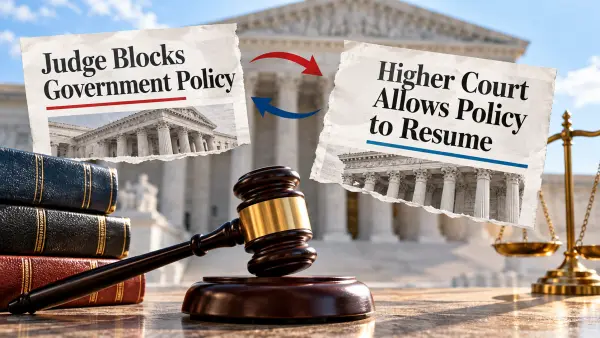
A headline announces that a federal judge has blocked a new government policy. A week later another headline says a higher court has allowed the policy to resume. Did the first judge change their mind? Not necessarily. Courts can issue orders that regulate what happens while a lawsuit continues, and higher courts can pause those orders without finally deciding the underlying case. Understanding this distinction is essential for reading political news.
The broad term injunction means an order requiring someone to act or refrain from acting. In civil litigation, a plaintiff brings a lawsuit against a defendant. If the plaintiff claims that an upcoming action will cause immediate damage, they may ask the judge for a temporary restraining order, often called a TRO. Under federal Rule 65, a TRO issued without notice normally expires within fourteen days unless the court extends it for good cause or the opposing party agrees to a longer period.
The court may then consider a preliminary injunction, which generally lasts while litigation continues. Unlike a TRO issued without advance notice, a preliminary injunction requires notice to the opposing party. Neither order means the plaintiff has won. It means the court has decided that temporary protection is appropriate while the dispute is argued.
How does the judge decide? Four familiar considerations guide preliminary-injunction decisions. One is the likelihood of success on the legal claim. Another is the possibility of irreparable harm, meaning damage that ordinary compensation later would not adequately fix. Judges also weigh the balance of equities, comparing hardships to both sides, and the public interest, considering effects beyond the immediate parties. These factors overlap, and the legal tests can differ with the type of case.
Suppose federal officials plan to share voter registration files with another agency, and a group alleges that this would violate privacy law. If the data are transferred before a trial, confidentiality might be impossible to recover. A judge could therefore temporarily prevent the transfer while considering the legal questions. By contrast, a decision on the merits resolves the substantive issues rather than preserving conditions until a later hearing.
That difference matters when a party files an appeal. An appeals court reviews an earlier decision; it does not normally conduct a fresh trial with new witnesses. The losing party may ask for a stay, which pauses the lower court’s order. If a court stays an injunction, the conduct previously blocked may be permitted again during the appeal. A stay does not establish that the conduct is legal. Likewise, denying a stay does not settle the whole dispute.
A final judgment generally resolves the case at the trial-court level, although further appeals may follow. Before reaching a final answer, a court must have jurisdiction, the legal power to decide the kind of dispute presented. The plaintiff must also satisfy standing requirements, showing a concrete injury that the court can address. A judge can dismiss a case on procedural grounds without deciding whether the challenged policy was lawful.
Courts also consider precedent, earlier decisions that bind or guide later rulings. The Supreme Court receives many requests for urgent action through its emergency docket, sometimes called the shadow docket. These requests are often decided on accelerated written submissions rather than the full briefing and oral argument used in ordinary cases.
In 2026, emergency orders have shaped disputes over election rules and federal authority. In August, the Supreme Court voted 6-3 to stay an injunction that had blocked parts of an executive order on federal elections. The stay lasts while the appeal and any petition for Supreme Court review proceed, and it ends automatically if the Court declines to take the case. The stay changed what could happen next, but it was not a final decision on every legal question.
The scope of an order is just as important as its timing. Does it protect only the named plaintiffs, a certified class, or people nationwide? In the 2025 case Trump v. CASA, the Supreme Court held that universal injunctions, which protect people who are not part of a case, likely exceed the authority Congress gave federal courts. Relief generally must go no further than needed to give the plaintiffs complete relief.
Both developments are debated. Critics of broad injunctions argue that a single district judge should not set national policy. Others reply that relief limited to plaintiffs can leave similarly situated people unprotected and create different rules in different places. On the emergency docket, critics, including some justices, say short explanations and limited briefing give lower courts and parties too little guidance. Defenders say urgent disputes cannot wait for ordinary timetables and that every court has a process for emergency requests.
When reading the next court headline, ask four questions: What exact order was issued? Is it temporary or final? Whom does it cover? What must happen next? Those questions often reveal more about the practical consequences than the words “win” or “loss.”
Glossary
injunction (noun): A court order directing someone to do or stop doing something.
Translations: 禁令 | 差止命令 | 금지 명령 | निषेधाज्ञा | أمر قضائي | судебный запрет | orden judicial | injonction
- The judge issued an injunction against the planned transfer.
- The injunction remained effective during the trial.
temporary restraining order (noun): A short-term order intended to prevent immediate harm before fuller proceedings.
Translations: 临时限制令 | 一時的差止命令 | 임시 금지 명령 | अस्थायी रोक आदेश | أمر تقييدي مؤقت | временный запретительный приказ | orden de restricción temporal | ordonnance restrictive temporaire
- The plaintiffs requested a temporary restraining order on Monday.
- A temporary restraining order can address immediate risk.
preliminary injunction (noun): An order controlling conduct while a case proceeds toward final resolution.
Translations: 初步禁令 | 仮差止命令 | 예비적 금지 명령 | प्रारंभिक निषेधाज्ञा | أمر قضائي أولي | предварительный судебный запрет | medida cautelar | injonction préliminaire
- A preliminary injunction paused construction.
- The preliminary injunction did not end the lawsuit.
plaintiff (noun): The party that files a civil lawsuit.
Translations: 原告 | 原告 | 원고 | वादी | المدعي | истец | demandante | demandeur
- The plaintiff filed the complaint in federal court.
- A plaintiff must explain the claimed harm.
defendant (noun): The party against whom a lawsuit is brought.
Translations: 被告 | 被告 | 피고 | प्रतिवादी | المدعى عليه | ответчик | demandado | défendeur
- The defendant challenged the allegations.
- The defendant received notice of the hearing.
irreparable harm (noun phrase): Injury that later compensation or remedies cannot adequately repair.
Translations: 不可弥补的损害 | 回復不能な損害 | 회복할 수 없는 피해 | अपूरणीय क्षति | ضرر لا يمكن جبره | невосполнимый вред | daño irreparable | préjudice irréparable
- The judge considered whether the disclosure would cause irreparable harm.
- Loss of confidentiality may constitute irreparable harm.
likelihood of success (noun phrase): A court’s preliminary assessment of whether a legal claim is likely to prevail.
Translations: 胜诉可能性 | 勝訴の見込み | 승소 가능성 | सफलता की संभावना | احتمال النجاح | вероятность успеха | probabilidad de éxito | probabilité de succès
- The court assessed the likelihood of success.
- Likelihood of success is not a final verdict.
balance of equities (noun phrase): Comparison of the practical harms and fairness concerns affecting the parties.
Translations: 利益衡量 | 利益衡量 | 이익 형량 | हितों का संतुलन | موازنة المصالح | баланс интересов | equilibrio de intereses | mise en balance des intérêts
- The judge evaluated the balance of equities.
- The balance of equities included costs to both parties.
public interest (noun phrase): The welfare or needs of the broader community considered by a court.
Translations: 公共利益 | 公益 | 공익 | जनहित | المصلحة العامة | общественный интерес | interés público | intérêt public
- The public interest supported careful review.
- Judges consider the public interest when granting relief.
stay (noun): An order temporarily pausing a legal ruling or proceeding.
Translations: 暂缓执行令 | 執行停止 | 집행 정지 | स्थगन | وقف التنفيذ | приостановление | suspensión | sursis à exécution
- The appeals court granted a stay.
- The stay temporarily suspended the earlier order.
appeal (noun): A request that a higher court review a lower court’s decision.
Translations: 上诉 | 控訴 | 항소 | अपील | استئناف | апелляция | apelación | appel
- The government filed an appeal.
- An appeal usually reviews the existing record.
merits (noun): The substantive legal and factual questions that determine who should win.
Translations: 实体问题 | 本案の実体 | 본안 | मूल मुद्दे | موضوع الدعوى | существо дела | fondo del asunto | fond de l’affaire
- The case had not yet been decided on the merits.
- The merits concern whether the law was violated.
final judgment (noun): A court decision resolving the claims sufficiently to end proceedings at that level.
Translations: 最终判决 | 終局判決 | 최종 판결 | अंतिम निर्णय | حكم نهائي | окончательное решение | sentencia definitiva | jugement définitif
- The trial court entered a final judgment.
- A final judgment can still be appealed.
jurisdiction (noun): A court’s legal authority to hear and decide a matter.
Translations: 管辖权 | 管轄権 | 관할권 | क्षेत्राधिकार | اختصاص قضائي | юрисдикция | jurisdicción | compétence juridictionnelle
- The court checked whether it had jurisdiction.
- A court without jurisdiction cannot reach the claim.
standing (noun): The legal requirement that a person have a sufficient connection to the dispute to sue.
Translations: 诉讼资格 | 原告適格 | 원고 적격 | मुकदमा दायर करने की पात्रता | الصفة في التقاضي | право на иск | legitimación procesal | qualité pour agir
- The plaintiff had to establish standing.
- Standing requires a sufficient connection to the alleged injury.
precedent (noun): An earlier judicial decision that guides or binds decisions in later cases.
Translations: 判例 | 先例 | 판례 | न्यायिक नज़ीर | سابقة قضائية | прецедент | precedente | précédent
- The lawyers cited an earlier precedent.
- A binding precedent can constrain a lower court.
emergency docket (noun phrase): Requests for rapid action considered by the Supreme Court outside ordinary full briefing.
Translations: 紧急案件清单 | 緊急案件 | 긴급 사건 목록 | आपातकालीन मामला सूची | جدول القضايا الطارئة | реестр срочных дел | expedientes de emergencia | rôle d’urgence
- The request reached the emergency docket.
- Cases on the emergency docket may move quickly.
scope (noun): The particular people, places, actions or issues covered by a court order.
Translations: 适用范围 | 適用範囲 | 적용 범위 | दायरा | نطاق | сфера действия | alcance | portée
- The opinion explained the scope of the injunction.
- The scope may be limited to particular plaintiffs.
Discussion Questions
- Have you ever followed a news story about a court blocking a policy? What did you understand from the headline?
- Why can a policy resume after a judge originally blocked it?
- Should judges be able to pause a policy before a trial is finished?
- Why does the law require notice before a preliminary injunction?
- What makes a harm irreparable, in your view?
- Which argument about broad injunctions do you find more persuasive: limiting them or allowing them?
- How can a case end without a ruling on the underlying policy?
- What are the advantages and disadvantages of fast emergency review?
- Why does the scope of an injunction matter to people who are not named in a case?
- Why do court orders about elections or immigration draw such strong reactions in the US?
- Should the Supreme Court explain its emergency decisions in more detail?
- Imagine you are a judge asked to block a new policy next week. What would you want to know first?
Related Links
- Cornell: Federal Rule 65 on Injunctions
- Supreme Court: Trump v. California Docket
- Supreme Court: Trump v. CASA Opinion
- Reuters: Critics and Defenders of Emergency Docket
- Bloomberg Law: Judge Defends Emergency Orders
