
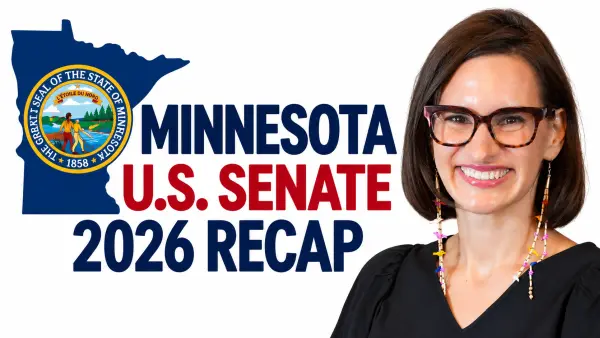
This recap reflects reporting available as of Nov. 21, 2026. Vote figures are the latest reported counts and may differ slightly from certified totals. For the race as it looked at the start of October, see our Minnesota Senate election briefing.
The Result
Lt. Gov. Peggy Flanagan held Minnesota’s open Senate seat for Democrats on Nov. 3, defeating Republican Michele Tafoya 53.7 percent to 43.6 percent with 99 percent of the vote counted. The AP called the race just after midnight Eastern time. Flanagan, a citizen of the White Earth Band of Ojibwe, becomes the first Native American woman elected to the Senate. She succeeds retiring Democratic Sen. Tina Smith.
The map was lopsided in two directions. Tafoya carried 72 of Minnesota’s 87 counties, mostly rural ones, but Flanagan’s margins in the largest counties outweighed them: she won Ramsey by more than 51 points and Hennepin by nearly 46.
How the Campaign Unfolded
Our briefing at the start of October described a race within a few points, with Tafoya centering her campaign on fraud in state social-services programs and Flanagan tying her opponent to Trump, the war with Iran and health care. That framing held through the fall. Tafoya, a former NBC sideline reporter who described herself as pro-choice, tried to make the election a referendum on Gov. Tim Walz’s handling of the fraud cases, and on Flanagan’s role as his lieutenant governor.
Flanagan campaigned on what she called a fair economy, affordable health care and support for farmers, and called for ending the administration’s mass deportation efforts. Immigration enforcement stayed a live issue after Operation Metro Surge, a federal operation earlier in the year that sparked protests when federal agents fatally shot two U.S. citizens. In the final days, national analysts at NPR described Minnesota as moving toward Republicans, a surprise in a state Kamala Harris carried in 2024.
Why Voters Chose Flanagan
Tafoya’s main issue worked, but not enough. In the ABC News Voter Poll, 61 percent of Minnesota voters called fraud in state agencies and programs a major problem, and Tafoya won those voters 67 to 29. The other 39 percent went overwhelmingly to Flanagan. Voters were split on both candidates: 46 percent said Flanagan’s views were too extreme, and 46 percent said Tafoya had the right experience to serve.
What tipped the race was the broader environment. About 62 percent of voters disapproved of Trump, and the largest group, the 37 percent who named the state of democracy as their top issue, backed Flanagan 80 to 19. Flanagan won suburban voters 60 to 38 and voters under 30 by 74 to 22, while Tafoya won rural voters 66 to 31 and small-town voters 57 to 40.
Expectations vs. Outcome
- Polling: In September, KSTP/SurveyUSA had the race tied and RealClearPolitics averaged Flanagan ahead by 1.6 points. Late polls ranged from a 3-point Flanagan lead in InsiderAdvantage to 14 points in New York Times/Siena, as our final ratings roundup noted. She won by about 10.
- Forecasters: The Cook Political Report rated the race Lean Democratic at the end, and Sabato’s Crystal Ball moved it to Likely Democratic. RealClearPolitics had listed it as a Toss-up in September.
Our briefing cited InsiderAdvantage pollster Matt Towery, who called his one-point September result unusual for a blue-leaning state and pointed to Walz’s falling approval and the fraud cases. The fraud issue proved real in the voter data, but the polls showing a toss-up overstated Tafoya’s chances. Our caution that polls in this race were better read as a range than a forecast held up: the result landed inside the range of late polls, near its Democratic end.
NBC had described Flanagan’s primary win as another victory for Democrats’ progressive wing. Her general election margin, larger than many expected for a Medicare for All supporter, gives that wing a second data point alongside Michigan.
Victory and Concession
Flanagan spoke at the DFL watch party in St. Paul, where Native drummers played a victory song. She called the result a triumph over President Trump, and her husband, Tom Weber, noted the significance of a Native woman winning a seat once held by Sen. Knute Nelson more than a century ago.
This article could not find a public concession statement or speech from Tafoya, or any statement about her plans.
- Flanagan’s victory night (Minnesota Reformer, article)
- Flanagan’s victory speech (in our victory speeches roundup)
What’s Next for Both Candidates
Current as of Nov. 21, 2026.
Flanagan will be sworn in with the new Congress in January, leaving the lieutenant governor’s office. She has said she will take on what she called the most corrupt administration in the nation’s history. Tafoya, in her first campaign for office, would have been Minnesota’s first Republican woman in the Senate.
