
Inside the Parties: how each party is processing the 2026 midterms.
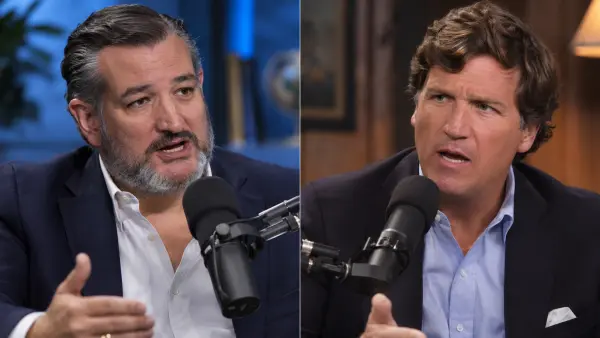
Within days of losing both chambers of Congress, two of the most widely followed voices on the right recorded their own post-mortems. Texas Sen. Ted Cruz and co-host Ben Ferguson devoted several episodes of Verdict with Ted Cruz to the results, including a 17-minute reaction recorded the day after the election and a 33-minute “Week in Review” titled “The Road Back After a Historic Collapse.” Tucker Carlson spent nearly two hours on the results with pollster Rich Baris in an episode titled “Tucker Responds to the Republican Midterm Bloodbath.”
The two shows agree on the size of the defeat and on which voters left. They disagree on why. Cruz, a sitting senator, puts the cost of living first. Carlson, who said in June he would not support the Republican Party this cycle, puts the Iran war first and blames the people he says pushed for it. Read together, they show the main fault line Republicans will have to resolve before 2028.
Background: The Argument Inside the Party
The day after the election, Vice President JD Vance posted that the war was the reason Republicans lost and that any honest conversation had to start there, The Christian Science Monitor reported. Donald Trump Jr. shared the post approvingly. President Trump defended the war and pointed to fuel costs instead, telling Fox News that he thought gasoline prices, not the war itself, were the problem. Other Republicans, including former Bush press secretary Ari Fleischer, argued the attack on Iran was right but the US did not finish the job. Both podcasts were recorded against this backdrop.
Ted Cruz and Ben Ferguson: A Cost-of-Living Election
The scale. Cruz called the result “a Watergate-level repudiation” and said Texas, today at least, is blue. Democrats won every statewide office in Texas, leaving Cruz as the only Republican still holding one, and James Talarico became the first Democrat to win a Texas Senate race since 1988. Cruz had warned before the election that Texas Republicans could lose every statewide race, Newsweek noted, and few believed him.
The cause. Cruz argued that the results were driven less by turnout than by voters who felt Republicans ignored affordability, rising costs and household budgets. He did not wave away the war. In a written statement matching his podcast remarks, he also criticized tariffs and the prolonged war with Iran as contributors to voter frustration, Fox 26 Houston reported. The difference from Vance is emphasis: Cruz treats the war as one source of economic pain rather than the main story.
Who left. Cruz listed blue-collar workers, young voters, Hispanic voters, farmers and ranchers, and rural communities, and said evangelical Christians did not turn out with their usual enthusiasm.
The remedy. His answer was not moderation. He argued Republicans should rebuild as a true blue-collar party organized around affordability and economic opportunity. In a later episode he also predicted that Democrats would overreach, reading an economic protest vote as a mandate for a broader progressive agenda, and that Republicans could win back voters, in Texas and nationally, if Democrats fail to deliver on costs.
A note on sourcing. This article could not locate a full transcript of the Cruz episodes, so it draws on the episode descriptions and on news coverage that quoted them. That is why this section has no timestamps.
Tucker Carlson and Rich Baris: A War Election
Timestamps below are from the audio version’s transcript and may differ slightly on YouTube.
The scale. Carlson opened by calling the results a disaster (00:00:01) and, as TheWrap summarized, declared the end of both the Trump era and the Fox News era. Baris called it the worst defeat for an incumbent party since Watergate (01:22:27), the same comparison Cruz reached for.
The cause. Carlson’s central claim was that the Iran war cost Republicans the election and that Fox News hosts, speaking to a president they knew was watching, helped push him into it (00:32:21). He put it this way: “It was Lindsey Graham’s program, this war that destroyed the Republican Party.” These are his opinions; Fox News and Sen. Graham were not part of the conversation. Carlson also disputed a Fox poll he said showed Iran as a top issue for only 4% of voters (00:35:54). This article could not locate that poll, but other data point in two directions. In AP VoteCast, few voters named foreign policy as the country’s top issue, and fewer called the war crucial to their vote than said so of the cost of living, according to the AP. At the same time, most voters in the CBS News exit poll said the decision to take military action against Iran was the wrong one.
Who left. Baris said young men felt the war broke a promise made to them (01:24:59), and that millennial and Hispanic voters who backed Trump in 2024 were always conditional, transactional supporters rather than converts (01:44:44). The exit data support the direction of that shift: only about a third of Hispanic voters backed a Republican in their House race, and most voters under 30 said their vote was meant to oppose Trump. Carlson added that Republican messaging had alienated young men more broadly (00:54:18).
The timeline. Baris argued the slide began with the administration’s handling of the Epstein files and that the strike on Iran and the war that followed erased the Republican lead on the generic ballot (01:20:06). This article could not verify that sequence. He also said heavy spending in the Texas Republican Senate primary left Ken Paxton damaged before the general election (01:44:44).
The way back. Baris was pessimistic about the Senate: “I’ll be 55 before Republicans have a real shot at winning the Senate again” (01:17:16). He said Vance had been weakened by the results but remained the only Republican he thought could win the Rust Belt (01:36:15). Carlson asked who designed a strategy built around the war and whether anyone would face consequences (01:32:25), and Baris said officials who misled voters should apologize (01:52:55). Carlson also spent long stretches on Israel policy, federal antisemitism efforts and the Epstein files. Those segments mix opinion with claims this article could not verify, including Baris’s estimate of how Jewish voters split (01:23:06).
Where They Agree, and Where They Split
Both shows describe a historic defeat and name the same lost voters: younger, Hispanic and working-class Americans who moved toward Trump in 2024. Both reject the idea that the answer is to move to the center.
They split on cause and on blame. For Cruz, the war was one of several pressures on household budgets, and the failure was the party’s as a whole. For Carlson and Baris, the war was the decisive choice, and specific people made it. The data do not settle the question, partly because the two explanations overlap: even Trump tied the war to higher gasoline prices. Voters ranked the cost of living above the war, but most also judged the war a mistake.
Their positions inside the party also differ. Cruz is a sitting senator arguing for repairs to a coalition he still belongs to. Carlson announced in June that he would not support the Republican Party, AllSides reported, so his critique comes from someone who has already walked away.
Looking Ahead
The lame duck and 2027. The first test is whether congressional Republicans distance themselves from the war before a Democratic Congress arrives in January. Watch how many Republicans support limits on war funding in the defense bill, and whether Cruz’s affordability message shows up in the party’s response to Democratic bills on prices and energy.
2028: hawks versus restrainers. Vance’s post-election list of what voters wanted (ending the war, focusing on inflation, putting America first and changing the relationship with Israel) reads like an early platform. If he runs on it, he will be running against part of his own administration’s record. Republicans who supported the war will argue the opposite, as Fleischer already has. The primary may turn less on Trump himself than on which account of 2026 the party accepts.
The coalition question. Both shows agree the 2024 gains with young and Hispanic voters were not permanent. Whether they can be won back may depend on things neither podcast controls: gas prices, the war’s end and whether Democrats deliver on costs. Cruz is betting Democrats will overreach. Baris is betting the damage lasts a decade. The 2028 results will show which bet was closer.
Related Links
- Verdict with Ted Cruz: The Road Back After a Historic Collapse
- Verdict with Ted Cruz: Bloodbath: What Happened, Why and Where Do We Go from Here?
- Transcript: Tucker Responds to the Republican Midterm Bloodbath
- CBS News: Exit Polls Show How Democrats Won the 2026 Midterms
- Boston Globe: After a Devastating Defeat, Republicans Search for Answers
- Newsweek: Where Republicans Are Laying Blame for the Midterm Loss
Discussion Questions
- When you vote, do prices or foreign policy matter more to you?
- Do you think the Iran war or the cost of living did more damage to Republicans?
- Can the two explanations really be separated, given the war’s effect on gas prices?
- Whose analysis did you find more convincing, Cruz’s or Carlson’s, and why?
- Should a party listen more to critics inside it or to critics who have left?
- Why do voters who switch parties often describe their vote as a protest rather than a choice?
- Is it fair to blame media figures for a president’s policy decisions?
- What would a “blue-collar party” need to do to earn that label?
- Which of these predictions do you expect to hold up by 2028?
- Imagine you are a Republican strategist. What is the first thing you would change?
