
What Happened
More than 60 U.S. senators have joined the Lindsey O. Graham Sanctioning Russia Act of 2026, giving the bipartisan proposal enough announced support to overcome a Senate filibuster if its sponsors vote for cloture.
Senators Richard Blumenthal of Connecticut and Darline Graham of South Carolina introduced the revised measure with colleagues from both parties after Senator Lindsey Graham’s death. Lindsey Graham and Blumenthal had worked on versions of the sanctions proposal since 2025.
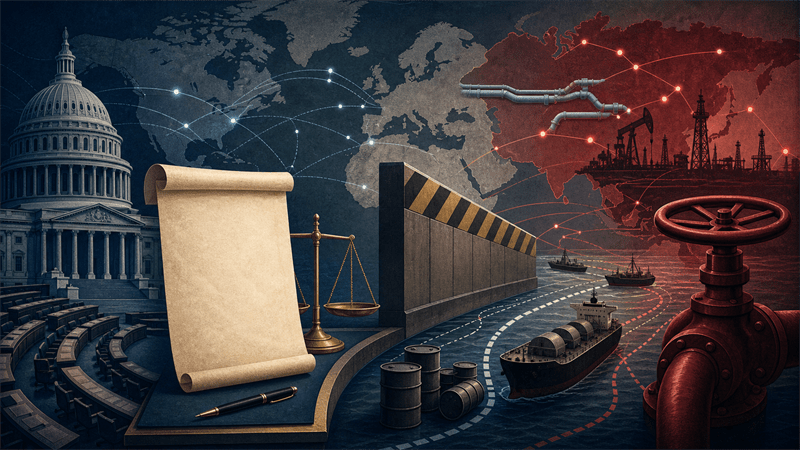
The bill would impose mandatory sanctions on Russian political and military leaders, banks, state energy projects, defense suppliers, and vessels involved in sanctions evasion. It would also authorize tariffs of up to 100 percent on goods from countries that rank among the largest buyers of Russian oil and gas or major facilitators of oil-sanctions evasion.
Strong Senate sponsorship does not make the proposal law. It still needs floor time, Senate passage, House passage of the same text, and the president’s signature. President Donald Trump has spoken favorably about advancing it in Graham’s honor, but details about timing and possible additions remain unsettled.
Background
Russia relies heavily on energy exports for government revenue. Since Russia’s full-scale invasion of Ukraine in 2022, the United States and its allies have tried to reduce that revenue through sanctions, import restrictions, export controls, and an international price cap on Russian oil.
Russia has continued selling large amounts of oil and gas, especially to buyers outside the Western sanctions coalition. It also uses a network of older tankers, complex ownership arrangements, alternative insurers, and shipping practices often described as a shadow fleet.
The original Graham-Blumenthal proposal called for tariffs as high as 500 percent on countries continuing certain trade with Russia. The revised bill narrows that approach. It limits the main tariff provision to the five largest purchasers of Russian crude oil or natural gas and the five largest facilitators of oil-sanctions evasion. The maximum rate is 100 percent.
The revision also includes an exception for countries whose imports account for less than 15 percent of Russia’s natural-gas exports and that are taking significant steps to reduce those imports. It permits the president to waive sanctions, restrictions, or duties after certifying to Congress that a waiver serves the U.S. national interest.
What the Bill Would Do
Sanctions on Russian leaders and institutions
The bill directs the president to sanction Russian President Vladimir Putin, senior political and military officials, certain oligarchs, state-owned enterprises, and foreign persons supporting Russia’s defense industry or undermining Ukraine.
It also targets major Russian financial institutions, including the Central Bank of the Russian Federation, Sberbank, and Gazprombank, along with large energy projects such as Yamal LNG and the Arctic LNG projects.
Restrictions on U.S. activity
The proposal would restrict U.S. persons from purchasing Russian sovereign debt, making new investments in Russia or its energy sector, transferring funds for the Russian government or covered officials, and exporting U.S.-origin energy products to Russia.
Action against the shadow fleet
The bill would sanction vessels and foreign persons involved in moving Russian energy or other goods to evade sanctions. It covers owners, operators, insurers, senior crew, and other participants when the statutory conditions are met.
Tariffs on major energy buyers
The U.S. trade representative would identify and reassess the largest buyers every 180 days. Tariffs of up to 100 percent could then apply to imports from countries within the bill’s scope. Senate aides identified China and India among the largest purchasers of Russian crude, while several European and Asian countries appeared on the natural-gas list.
The policy is designed to make access to the U.S. market more expensive for countries that continue providing Russia with energy revenue. It could also affect U.S. import prices and relationships with countries that Washington treats as partners in other areas.
What Different Sides Are Saying
Supporters of the bill
Supporters argue that energy revenue helps finance Russia’s war and that targeting major buyers can pressure Moscow without sending U.S. troops into the conflict. They say sanctions on banks, energy projects, and the shadow fleet would make it harder for Russia to avoid existing restrictions.
Fact check: Russia earns substantial revenue from oil and gas exports. Whether new sanctions force a change in war policy is uncertain because enforcement, global energy demand, alternative payment systems, and presidential waivers can all affect the outcome.
Backers also emphasize the bill’s bipartisan sponsorship. More than 60 sponsors create a plausible path through the Senate’s cloture process and signal unusually broad agreement on a foreign-policy measure.
Fact check: More than 60 sponsors is politically important, but it does not guarantee final passage. Senators can change positions, procedural disputes can arise, and the House must separately approve the legislation.
Concerns about tariff authority
Some Democratic lawmakers support sanctions on Russia but object to giving the president broad tariff authority. Senator Ron Wyden, Representative Richard Neal, and Representative Gregory Meeks have warned that the provision could raise prices for U.S. consumers and allow the executive branch to pressure allies or trade partners with limited congressional control.
Fact check: Tariffs are collected from U.S. importers, not directly from foreign governments. Importers may absorb some cost, negotiate lower prices, change suppliers, or pass costs to consumers. The final effect varies by product and market.
Critics also note that the covered-country lists can change and that the bill lacks a direct mechanism for Congress to cancel individual tariffs. The waiver provisions give the president flexibility, but that flexibility can also make enforcement less predictable.
Fact check: The revised bill is narrower than the earlier 500 percent proposal. It limits the core tariff provision to top purchasers and includes exceptions and a national-interest waiver. Those changes reduce the scope but do not eliminate concerns about delegated power.
Concerns from affected countries
Countries that buy Russian energy may argue that they need affordable supplies, that rapid changes could disrupt domestic markets, or that U.S. secondary pressure interferes with their independent foreign policy. Retaliation could affect U.S. exporters and broader diplomatic cooperation.
Fact check: The bill does not automatically impose a 100 percent tariff on every country trading with Russia. It targets defined groups of major purchasers and evasion facilitators, allows rates up to 100 percent, and includes exceptions and waiver authority.
What Happens Next
Senate leaders must decide whether and when to bring the measure to the floor. The proposal is competing with defense, spending, and other time-sensitive legislation.
If the Senate passes it, the House must consider the same text or negotiate differences. Any effort to add unrelated sanctions or change the tariff language could reopen the bipartisan agreement.
Until both chambers act and the president signs the bill, the proposal creates no new sanctions or tariffs.
Fact Check
- Claim: The bill has already passed the Senate. False. It has more than 60 announced sponsors but still requires a vote.
- Claim: Sixty sponsors guarantee the bill will become law. False. Senate procedure, House action, and presidential approval remain necessary.
- Claim: Foreign governments directly pay U.S. tariffs. False. U.S. importers pay tariffs at the border, although the economic burden can be shared in different ways.
- Claim: The bill requires a 100 percent tariff on every buyer of Russian energy. False. It targets specified top purchasers and facilitators, and the rate can be lower.
- Claim: The president would have no flexibility. False. The bill contains exceptions and national-interest waiver authority.
Related Links
- Full text of the Lindsey O. Graham Sanctioning Russia Act of 2026
- Official one-page summary of the revised legislation
- Senator Blumenthal’s release announcing more than 60 sponsors
- Axios report on the bill’s Senate support and procedural outlook
- Reuters report on changes from the earlier sanctions proposal
- Reuters report on concerns about tariffs and delegated authority
- CBS News overview of the bill’s sanctions and tariff provisions
Discussion Questions
- Which part of the bill is most likely to affect Russia?
- Should the United States penalize countries that buy Russian energy?
- How might tariffs affect American consumers?
- Why did lawmakers reduce the proposed rate from 500 percent?
- Does broad bipartisan sponsorship make a policy more persuasive?
- How much tariff authority should Congress delegate to a president?
- What role should national-interest waivers play in sanctions laws?
- Why are shadow-fleet sanctions difficult to enforce?
- Which claim from supporters or critics needs more evidence?
- If you represented an affected U.S. ally, how would you respond?
