
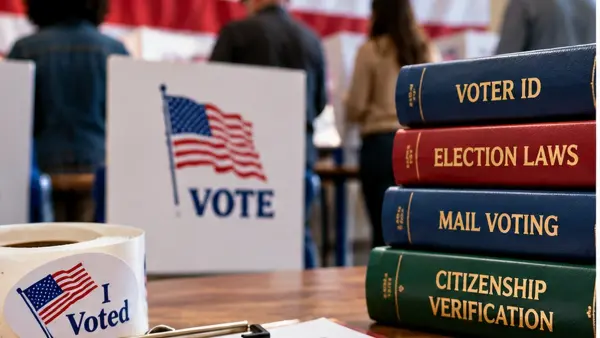
Voters in 21 states face new rules for registering or casting ballots in the November 3 midterm elections. Nearly 40 laws passed in Republican-controlled states are taking effect for the first time this year, according to a tally cited in an October 12 Associated Press report. Courts have already changed how some of the rules apply, and several challenges are still pending.
The laws cover voter ID, proof of citizenship, mail-ballot procedures and voter-roll maintenance. Republican sponsors describe them as safeguards for election integrity, while voting-rights groups say they make it harder for eligible citizens to vote.
Background
State and local officials run U.S. elections, and there is no single national procedure for registration, identification or mail voting. AP reported that President Trump pushed Congress for a proof-of-citizenship law, signed an executive order seeking national voter ID and tried to limit mail voting through Postal Service changes, and that none of these took effect before the midterms.
The count of nearly 40 laws comes from the Brennan Center for Justice, which describes them as making it harder to register, stay on the rolls or vote. That is an advocacy group’s characterization, and the figure counts laws, not affected voters. This article could not review the underlying tally.
What Is Changing
New Hampshire: A 2026 law removed student ID cards as an accepted form of voter ID. Its sponsor said it applies “the same government-issued ID standard to all voters,” and AP noted that students can get state IDs free.
Mississippi: Registrants without a matching driver’s license number are checked against a federal citizenship database. Flagged applicants are notified and can submit citizenship documents such as a birth certificate or passport before an application is denied.
Utah: Mail ballots must be returned with additional information on the envelope.
Ohio: Ballots must now arrive by Election Day, ending a four-day grace period, and proof of citizenship is required to register at motor vehicle offices. A voter-roll purge is also under challenge by the ACLU of Ohio.
South Dakota: First-time registrants must present approved ID in person, and the ACLU has sued to stop the requirement.
Not every 2026 enactment tightens rules. The National Conference of State Legislatures lists changes such as Connecticut’s new no-excuse absentee voting and ballot-correction process, and Virginia’s extended deadline for receiving postmarked ballots.
What the Courts Have Done
Ohio: On August 25, U.S. District Judge Solomon Oliver Jr. temporarily blocked the motor-vehicle proof-of-citizenship rule, finding it likely conflicts with the National Voter Registration Act. On September 23, a divided Sixth Circuit panel stayed that injunction, so the requirement applies for the midterms while the appeal continues.
New Hampshire: On October 2, Judge Joseph Laplante left the student-ID law in place but rejected the secretary of state’s directive that student IDs “cannot be used.” He ordered revised guidance saying officials may weigh them with other evidence of identity. Secretary of State David Scanlan criticized the ruling, and the state has said it will appeal. A separate May ruling lets voters affirm citizenship by affidavit for November, and that ruling is also on appeal.
Fact-check: A stay or temporary injunction decides what can be enforced now, not whether a law is ultimately lawful. Both Ohio and New Hampshire could change again before November 3.
What Different Sides Are Saying
Supporters: Republican lawmakers argue the rules verify eligibility and reduce errors. Ohio state Sen. Theresa Gavarone, the sponsor of the Ohio bill, said hundreds of noncitizens were removed from the state’s rolls in the past two years.
Fact-check: Noncitizens are already barred from voting in federal elections, so these laws change how eligibility is checked, not who is eligible. AP reported that the Justice Department recently announced about 90 election-misconduct cases, roughly 50 involving alleged noncitizen voting, against 227 million registered voters in 2024. This article could not verify Gavarone’s figure, and neither number shows how much a given rule would prevent.
Opponents: ACLU attorneys say eligible voters are at risk of being disenfranchised, especially those who lack ready access to a birth certificate or passport. The League of Women Voters of South Dakota said the state’s in-person registration requirement is its main concern.
Fact-check: Some eligible citizens do lack documents, but exemptions, alternatives and court orders differ by state. The effect on turnout and rejected ballots will not be measurable until after the election.
What Voters Should Know
Rules differ by state and some are changing in court, so voters should confirm their registration, accepted ID and ballot deadlines with their state or local election office. Ohio’s October 5 registration deadline has passed, and Ohio mail ballots must arrive by Election Day.
Note on Scope
This article covers a multi-state trend, not every law or jurisdiction. The count describes laws rather than voters affected, and it does not measure fraud prevented or ballots rejected. Court rulings, appeals and election-office guidance could change implementation before November 3.
Related Links
- AP via NBC Los Angeles: GOP States Enact New Voting Rules
- Mississippi Today: Many GOP States Have Set New Rules
- NCSL: 2026 Election Enactments
- Boston Globe: New Hampshire Student ID Ruling
- Ballotpedia News: Ohio Citizenship Rule Blocked
- Democracy Docket: Sixth Circuit Stay
Discussion Questions
- Have you ever had trouble registering to vote or voting? What happened?
- What identification should be sufficient to vote in a federal election?
- How can states verify citizenship without creating obstacles for eligible voters?
- Should student IDs be accepted as voter identification?
- Should a mail ballot count if it is postmarked by Election Day but arrives afterward?
- Why do voting rules vary so much from state to state?
- What evidence would show that a new law improves election security?
- What evidence would show that a new law keeps eligible citizens from voting?
- How should courts handle election-law disputes close to Election Day?
- Imagine you are a state election official. How would you explain this year’s rule changes to first-time voters?
