
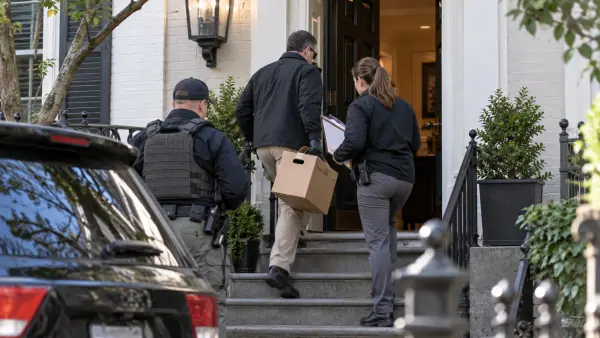
Federal agents searched Rep. Ilhan Omar’s Washington-area home on October 12 as part of a criminal investigation. The Justice Department said Homeland Security Investigations (HSI) agents carried out a judicially authorized search warrant, but it gave no details about the allegations or the evidence. Omar, a Minnesota Democrat, says she has done nothing wrong and calls the search an abuse of power.
This article reflects reporting available as of October 13. Details may change as the Justice Department or Omar’s office say more.
Background
Omar represents Minnesota’s 5th District, which includes Minneapolis, and was first elected in 2018. She won the August 11 Democratic primary with about 81 percent of the vote and faces Republican John Nagel on November 3, according to unofficial primary results.
Republicans have questioned her immigration history since before her first election. Vice President JD Vance has accused her of immigration fraud and said, without offering evidence, that the administration believed she committed it, AP reported. Omar denies the claims. In mid-September, White House border czar Tom Homan said Omar was the subject of a criminal investigation without giving specifics, TIME reported.
The reported basis for the search remains unconfirmed. CBS News reported, citing unnamed sources, that the investigation centers on immigration paperwork her late father completed when she was a child, with investigators examining possible false statements and immigration fraud. A separate wire report, relayed by TIME, described it similarly. The Justice Department has not confirmed this account, and this article could not verify it.
A judge authorized the warrant, and the Justice Department secured it. The department called the search “part of an ongoing federal criminal investigation,” and a Department of Homeland Security spokesperson referred questions to it. A warrant requires probable cause that evidence of a crime will be found; it is not a finding that anyone committed one. The warrant application and a list of seized items were not public in the reporting reviewed, and it is not known what charges are being pursued, whether anyone was arrested or whether Omar was home.
What Different Sides Are Saying
The administration: The Justice Department says only that the search is part of an ongoing criminal investigation. Vance and Homan have said publicly that the administration is investigating Omar. CBS reported that President Trump told reporters he had nothing to do with the search and that it was up to the department.
Fact-check: Members of Congress have no blanket protection from criminal investigation, and a judge’s authorization is a real safeguard. It does not establish guilt. This article could not locate public evidence supporting the fraud allegation, and Omar disputes it.
Omar and Democrats: Omar’s office says she did nothing wrong and called the search an “outrageous abuse of power.” She wrote on X that she would not be silenced and accused Trump of targeting political enemies. Minnesota Gov. Tim Walz said Trump is abusing his power to go after opponents before an election, and House Democratic leader Hakeem Jeffries called the search “deeply disturbing,” according to TIME.
Fact-check: The search came about three weeks before the election. The Justice Manual bars prosecutors and agents from timing investigative steps to affect an election or to help or hurt a candidate. It turns on purpose, and it calls for consultation with the department’s Public Integrity Section where an action may raise election concerns, according to Lawfare’s review. The well-known “60-day rule” is an unwritten practice that officials describe inconsistently, and both it and the manual are internal policies, not statutes. In a separate case, a federal judge doubted she could enforce them.
Fact-check: CBS, citing sources, reported that Attorney General Todd Blanche knew of the search in advance and that the department consulted its Public Integrity Section. The department has not described that process on the record, so this article treats it as unconfirmed. Timing alone does not prove an improper purpose, and compliance with the policy has not been shown either way.
Why the Timing Matters
The question is not whether prosecutors may investigate a candidate. It is what safeguards keep the process from being used, or seen as being used, for electoral advantage. Courts, internal Justice Department review and congressional oversight each reach different parts of that question, and none of them automatically settles it.
Note on Scope
This article could not locate any report that Omar has been charged. The immigration-related account rests on anonymous sources and earlier statements by officials, and it should not be treated as proof of fraud. The article does not predict whether charges will follow.
Related Links
- AP via PBS: Agents Search Omar’s Home
- CBS News: Homeland Security Search of Omar’s Home
- TIME: What to Know About the Raid
- MPR News: Omar’s Home Searched
- Lawfare: What the 60-Day Rule Requires
- Fox News: HSI Searches Omar’s Home
- Mshale: Omar Wins Democratic Primary
Discussion Questions
- What is the difference between a search warrant and a criminal charge?
- Should elected officials receive exactly the same investigative treatment as other citizens?
- Do you find the argument about election timing persuasive? Why or why not?
- What safeguards help keep investigations independent of political pressure?
- How much should prosecutors say publicly during an active investigation?
- How should news outlets report claims that rest on unnamed sources?
- Does a judge’s warrant settle concerns about political motivation?
- Should rules about investigations near elections be written into law rather than left to internal policy?
- How should authorities balance transparency with the privacy of people who have not been charged?
- Imagine you are the attorney general. What would you want to know before approving a search of a candidate’s home weeks before an election?