
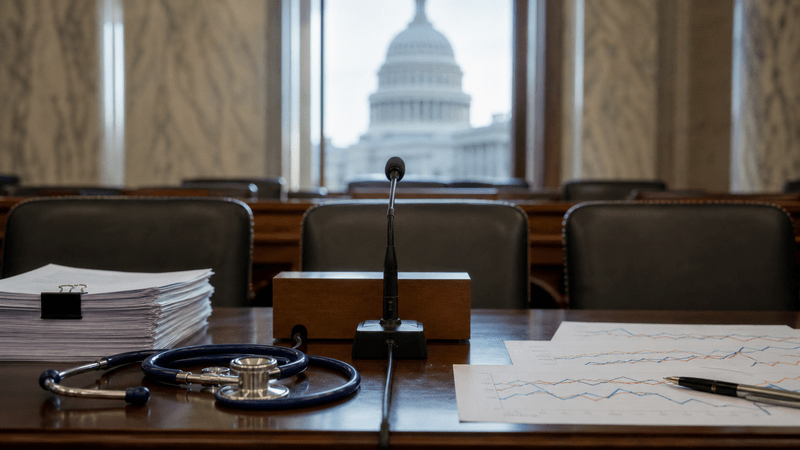
The Senate Health, Education, Labor and Pensions Committee advanced Erica Schwartz’s nomination to lead the Centers for Disease Control and Prevention on July 30. The vote sends her nomination to the full Senate.
Schwartz is a physician, lawyer and senior U.S. Coast Guard health official. If confirmed, she would take charge of the nation’s main public-health agency during disputes over vaccines, scientific guidance and the CDC’s independence within the Department of Health and Human Services.
The committee vote was close to party lines. Republican Chairman Bill Cassidy supported Schwartz after seeking assurances that she would defend evidence-based decisions. Independent Senator Bernie Sanders and other critics said her hearing answers did not show enough willingness to challenge Health Secretary Robert F. Kennedy Jr.
Background
The CDC tracks disease, investigates outbreaks, issues health guidance and supports state and local public-health agencies. The agency describes its mission as protecting health through science, data, policy and communication.
For most of the CDC’s history, its director was appointed without a Senate vote. A 2022 law changed that process. The director now requires Senate confirmation, giving lawmakers a formal opportunity to examine the nominee’s qualifications and approach.
Schwartz has medical and law degrees and serves as deputy surgeon general of the Coast Guard. At her July 15 confirmation hearing, the Associated Press reported that she oversees a Coast Guard health system with 41 clinics and 150 sick bays.
The Committee Decision
The HELP Committee advanced Schwartz after senators reviewed her record and questioned her about vaccines, political pressure and recent changes at the CDC. The Associated Press reported that Cassidy backed her after a private conversation in which he sought confidence that she would resist actions not supported by evidence.
The committee also advanced Sean Kaufman for another senior federal health position. Neither committee vote completes the confirmation process. The full Senate must vote before either nominee can take office.
What Different Sides Are Saying
Supporters of the nomination
Supporters point to Schwartz’s experience managing a national health system in a uniformed service. They argue that the CDC needs an administrator who can work within a large federal department while restoring trust and preparing for outbreaks.
Cassidy, a physician, has repeatedly stressed the importance of vaccines and reliable public-health information. In his opening hearing remarks, he said the next director must rebuild trust, improve readiness and support proven prevention tools. His eventual vote suggests he believed Schwartz had given adequate assurances.
Critics of the nomination
Sanders and other critics focused on whether Schwartz would act independently when evidence conflicts with the preferences of political leaders. Kennedy has questioned established vaccine recommendations and made major changes in federal health policy, creating concern among medical groups and former officials.
At the hearing, Schwartz said she would never betray the science and promised radical transparency. However, the Associated Press reported that she declined to directly challenge several Kennedy decisions. Critics viewed those answers as too cautious for an agency leader who may face intense political pressure.
Schwartz’s position
Schwartz presented herself as a leader who would review evidence, communicate openly and work through the department’s chain of command. She agreed that scientific evidence does not show a causal link between vaccines and autism. She did not promise to take a specific position on every disputed CDC webpage or policy before reviewing it.
That approach can be read in two ways. Supporters see professional caution and respect for evidence review. Critics see reluctance to state clear boundaries before confirmation.
Fact Check
Claim: Schwartz has been confirmed as CDC director
Verdict: False. The Associated Press says the HELP Committee advanced the nomination. A committee recommendation is an intermediate step; confirmation requires a vote by the full Senate.
Claim: The CDC director has always required Senate confirmation
Verdict: False. The Senate confirmation requirement is recent. Earlier directors were appointed by the president without this formal Senate process.
Claim: Schwartz said vaccines cause autism
Verdict: False. The Associated Press reports that Schwartz agreed the available evidence does not establish a vaccine-autism link. She was more cautious about committing to the exact wording of a CDC webpage before reviewing it.
Claim: The CDC makes every federal health decision independently
Verdict: False. The CDC organization page shows that the agency is part of the Department of Health and Human Services. Its director leads the agency but operates within federal law and the department’s structure.
Claim: Management experience alone resolves concerns about independence
Verdict: Unsupported. Schwartz’s Coast Guard experience is relevant to running a large health organization, as the Associated Press notes. It does not by itself prove how she would respond to a future conflict over scientific evidence.
Why the Nomination Matters
The CDC director can shape outbreak response, data publication, vaccine guidance and communication with the public. The role also requires coordination with state health departments, hospitals, laboratories and international partners.
The debate therefore involves more than one nominee. Senators are testing how the new confirmation process can protect scientific credibility while preserving democratic oversight of a powerful federal agency.
What Comes Next
Senate leaders must decide when to bring the nomination to the floor. Before a final vote, senators may seek additional written commitments or use debate to highlight concerns about staffing, vaccines and the agency’s relationship with HHS.
If confirmed, Schwartz’s early personnel choices, public statements and handling of the first major health controversy will provide stronger evidence about how she balances scientific judgment, department policy and presidential authority.
Related Links
- Associated Press: committee vote
- Associated Press: confirmation hearing
- HELP Committee chairman’s hearing remarks
- HELP Committee vote announcement
- CDC mission and work
- CDC organization
Discussion Questions
- What qualifications should a CDC director have?
- Why does the Senate now confirm the director?
- What does scientific independence mean in practice?
- When should an agency leader challenge a secretary?
- Were Schwartz’s hearing answers specific enough?
- How can the CDC rebuild public trust?
- What role should vaccines play in confirmation debate?
- How should senators evaluate management experience?
- Which early action would best test Schwartz’s leadership?
- Should health agency leaders serve fixed terms?
