
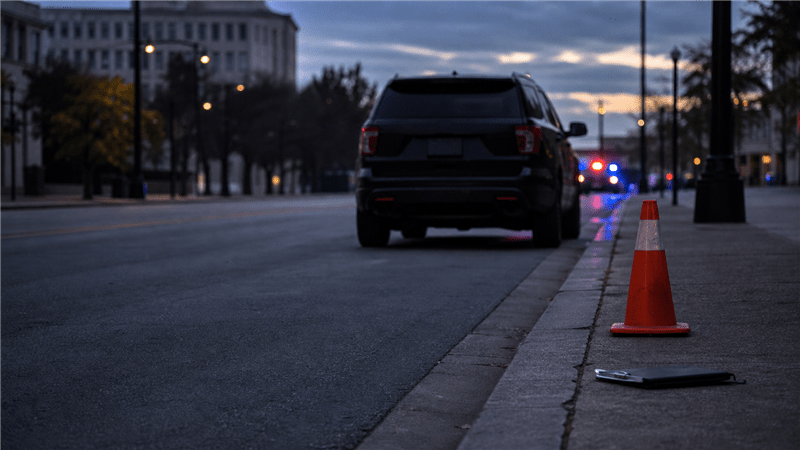
Immigration and Customs Enforcement has paused most vehicle stops connected to immigration enforcement after fatal shootings of drivers in Houston, Texas, on July 7 and Biddeford, Maine, on July 13. The change was reported by the Associated Press and Reuters, citing people familiar with the decision. The reported pause includes exceptions, such as executing a criminal warrant or working with partner agencies. ICE has not publicly described the directive in detail. Its public response was that it continually evaluates procedures to protect officers and the public.
Fact check: The reported policy change is based on accounts from people briefed on the decision, not on a public copy of an ICE directive. The two deaths occurred six days apart. AP and Reuters reporting each described the suspension as applying to most immigration-related vehicle stops.
The Two Shootings
In Houston, an ICE officer shot and killed Lorenzo Salgado Araujo during a July 7 vehicle stop. DHS said he refused commands, tried to ram an ICE vehicle and tried to run over an agent. DHS later confirmed that Salgado Araujo was not the person agents had intended to arrest. Three men who were in his van disputed the agency account through a lawyer, according to reporting by The Texas Tribune.
In Biddeford, an ICE officer shot and killed Johan Sebastián Durán Guerrero on July 13. DHS said agents had been watching the home of a person with a final removal order. Its public statement said the vehicle attempted to flee and that an officer fired while fearing for public safety. Senator Angus King said Homeland Security Secretary Markwayne Mullin told him that Durán Guerrero was not the target of the operation.
Fact check: The public DHS account in the Maine case did not say that Durán Guerrero tried to run over an officer. That more specific description appeared in King’s initial account of what Mullin told him. The official accounts of both shootings remain subject to investigation.
Evidence and Unanswered Questions
DHS has said the officers in the Houston shooting were not wearing body cameras. AP also reported that officers in the Biddeford shooting did not have body cameras. As of the latest reporting reviewed for this article, no public video fully shows the Houston shooting, and no body-camera recording is available from either event. That does not establish what happened in either encounter. It means key claims cannot yet be independently checked against officer-worn video.
In Houston, federal authorities have not publicly released evidence that confirms the DHS account that Salgado Araujo rammed a vehicle or tried to run over an agent. In Maine, DHS did not respond to AP’s request for more detail about what made the officer fear for public safety. Maine’s attorney general said initial statements suggested the driver was trying to flee in the direction of the agent. Federal, state and local authorities are investigating.
Fact check: Witness accounts are important but are not a final finding. Likewise, the absence of publicly released video is not proof that no other evidence exists. The investigations, including one involving the FBI and DHS’s inspector general in Maine, have not reached public conclusions.
The King-Mullin Discrepancy
One documented difference in the Maine account deserves particular attention. On July 13, King said Mullin told him the driver had “weaponized” the vehicle. Later, DHS publicly said only that the vehicle attempted to flee and that an officer fired while fearing for public safety. King subsequently said the contrast is a question for the investigation to resolve.
This is not a minor wording issue. Whether a vehicle was used against an officer, whether it was fleeing, and how close an officer was to it can matter when investigators assess a use of deadly force. At this stage, the available public statements do not settle those questions.
Body Cameras and the Congressional Response
The camera issue has drawn concern from lawmakers with different political affiliations. King said agents should have had body cameras and called for a full, transparent investigation. Republican Senator Susan Collins has previously advocated body cameras and de-escalation training for ICE personnel, and she said the Biddeford case raised critical questions before urging Mullin to stop non-urgent vehicle stops. The two senators also jointly asked the Justice Department to work with Maine state and local authorities during the investigation.
Congress appropriated $20 million in April for body-worn cameras for immigration-enforcement personnel. DHS said cameras had reached more than half of ICE field offices and that the rest would receive them within 60 days. Critics say the two shootings show that deployment and use need to be completed quickly. Supporters of the administration’s enforcement approach argue that agents still face dangerous, fast-moving encounters and that investigations should establish the facts before blame is assigned.
What Different Sides Are Saying
DHS and supporters of robust enforcement: DHS says its officers must make rapid safety decisions when a vehicle may endanger officers or others. The agency says it evaluates tactics to keep officers and the public safe, while declining to discuss operational details.
Critics and immigrant-rights advocates: They question vehicle stops as an immigration-enforcement tactic and seek independent investigations, evidence disclosure and universal body-camera coverage. They point to the lack of public video and to the fact that neither man was the stated target of the operation.
Shared ground: Both the official response and many critics say the facts should be established through a thorough investigation. The bipartisan attention to body cameras reflects a narrower area of agreement: reliable records can help evaluate dangerous encounters and build public confidence in the outcome.
Related Links
- AP: ICE pause and Biddeford shooting
- AP: Vehicle shootings and the policy change
- AP: Body-camera rollout after the Houston shooting
- The Texas Tribune: What remains unknown in Houston
- Senator King: Initial remarks on the Biddeford shooting
- Senators Collins and King: Request for cooperation in the investigation
- Reuters: ICE suspension and the Maine case
Discussion Questions
- What information would help you assess these shootings?
- Why might body-camera footage matter in this case?
- Which wording difference in the Maine accounts stands out most?
- Should immigration officers conduct vehicle stops?
- How should investigators weigh witness accounts?
- What limits should apply to deadly force near moving vehicles?
- Why can public evidence affect trust in an investigation?
- How do you view the reported pause in vehicle stops?
- What can lawmakers do to improve accountability?
- If you led ICE, what temporary rule would you adopt while investigations continue?
