
What Happened
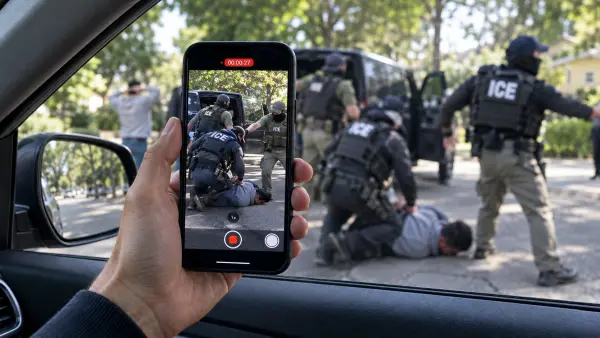
A new lawsuit filed by Common Cause alleges that federal agencies have systematically surveilled and intimidated private citizens who try to peacefully observe and record immigration enforcement operations. The suit describes seven Common Cause members in Maryland, Minnesota and New Jersey who say they were photographed, followed, reported to local police, pepper-sprayed, or threatened after monitoring federal officers.
In one instance described in the complaint, federal officers showed up at a Common Cause member’s home in Minnesota after the person had observed an immigration operation nearby.
Background
Observing and recording federal law enforcement in public is generally protected activity, and organized observer networks expanded significantly during large-scale immigration operations in cities including Minneapolis over the past year. One of those observers, Minneapolis resident Michael Khalili, spent months documenting federal officers’ activity in the Twin Cities after what the lawsuit describes as an unprecedented surge of enforcement there last winter.
Khalili pointed to a specific consequence of that documentation: when federal officers fatally shot Minneapolis resident Alex Pretti in January, administration officials initially described him as having committed an act of domestic terrorism. Bystander video, captured by observers on the scene, contradicted that account. “That’s the only reason why the government’s lies fell apart,” Khalili said. In a separate incident described in the complaint, ICE officers allegedly directed local police to bar an unnamed Common Cause member from a public parking lot outside an ICE facility in Maryland, an action the lawsuit characterizes as retaliation for lawful observation rather than a legitimate security measure.
What Different Sides Are Saying
Common Cause and the observers named in the suit argue the pattern of surveillance and intimidation described in the complaint is intended to discourage the kind of public documentation that has, in specific past cases, contradicted official government accounts of enforcement incidents. Fact-check: the Pretti case is a matter of public record this article has covered separately: bystander video did contradict the administration’s initial public description of that shooting, and a preliminary internal government report also did not support the “domestic terrorism” characterization.
This article could not locate a public statement from DHS or ICE responding to the specific allegations in the Common Cause complaint as of publication. The lawsuit itself is the primary source for the incidents described here, and this article has not independently verified each individual account beyond what the complaint and named observers describe.
Note on Scope
This is a newly filed lawsuit, and none of its claims have yet been tested in court. This article does not assume the allegations are proven, only that they have been formally filed and are attributed to named plaintiffs.
Related Links
- Lawsuit claims DHS is systematically intimidating ICE observers – NPR
- Lawsuit challenges intimidation of DHS observers across the country – Texas Public Radio
- Lawsuit challenges intimidation of DHS observers across the country – MPR News
Discussion Questions
- Have you ever seen someone recording or observing police or federal agents in public?
- Do you think there should be legal limits on how closely someone can observe or film law enforcement?
- Does the Pretti case change how you think about the value of public observation of enforcement operations?
- What responsibility do federal agencies have to explain their conduct when specific, named allegations like these are filed?
- How should the public weigh a lawsuit’s allegations before any court has ruled on them?
- Why might federal officers view observers as a problem, even when the observers are not interfering with operations?
- What would you do if federal officers showed up at your home after you had observed one of their operations?
- Should there be a formal, protected process for civilian observation of federal enforcement activity?
- How does the absence of a public agency response affect how you weigh a story like this one?
- Imagine you are a judge reviewing this case. What kind of evidence would you want to see first?
