
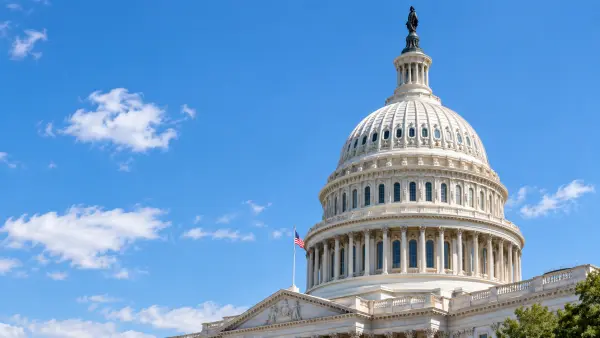
The Senate voted 90-6 on Aug. 8 to pass a bipartisan bill funding the federal government at current levels through Dec. 11, averting a shutdown when the fiscal year ends Sept. 30 and pushing the next funding deadline past the November midterms. The deal was negotiated by Senate Appropriations Chair Susan Collins, R-Maine, and Vice Chair Patty Murray, D-Wash., and sent to the House just before both chambers left for recess.
The House, however, had already passed its own version in July that funds the government only through Dec. 4 and omits several provisions in the Senate bill. Lawmakers will have to reconcile the two versions after they return in September, with the Senate back Sept. 14 and the House initially scheduled to return Aug. 31, before the Sept. 30 deadline.
Background
Neither chamber has passed full-year fiscal 2027 appropriations bills, so a stopgap measure was needed to avoid a lapse in funding. The House-passed continuing resolution moved largely along party lines with widespread opposition from Democrats. The Senate version differs in several ways: it extends funding six days longer, delays a proposed Office of Management and Budget rule that would give political appointees broader discretion to review and cancel federal grants, closes what Murray’s office called a loophole that would have let the administration shift funds from other programs to Border Patrol, and adds targeted funding for WIC, national security shipbuilding and the Disaster Relief Fund.
Passage was briefly complicated by a Republican dispute over a White House-requested provision delaying a ban on hemp-derived intoxicants until December. The White House issued a statement endorsing the Senate’s version specifically, according to Politico, but did not issue a comparable statement backing the House’s bill.
What Different Sides Are Saying
Collins, who faces a competitive reelection race in Maine this fall, described the bill as “straightforward” and said it avoids unrelated add-ons that could sink its chances. Fact-check: Collins is indeed in a competitive race this cycle and has built part of her campaign around a record of bipartisan dealmaking, which is relevant context for why reaching this deal mattered politically to her, not a claim about her motives.
Murray framed the bill as forcing concessions from Republicans, including the temporary block on the OMB grant rule. In a statement from her committee office, she said of that rule, “this rule is delayed; it is not dead,” and said Democrats intend to try to make the block permanent. Fact-check: that characterization is accurate. The provision pauses the rule’s implementation only through Dec. 11; it does not repeal it, so the underlying dispute over the rule remains unresolved.
House Republican leaders have not yet said whether they will take up the Senate’s version, negotiate a compromise, or press their own Dec. 4 approach when Congress returns. Fact-check: this article could not determine which outcome is more likely, or what happens if reconciliation talks are not finished before the Sept. 30 deadline.
Note on Scope
Both chambers remain on recess as of this writing, and the reconciliation process described above has not yet begun.
Related Links
- Senate leaders reach a deal to avert a shutdown before the midterm elections – NBC News
- Senate approves bill to fund government into December, but House support remains uncertain – CBS News
- Funding deal could spare agencies another shutdown fight – Government Executive
- CR and Far Between: Can the House and Senate Find a Funding Solution? – Brownstein Hyatt Farber Schreck
- Senator Murray Remarks on Averting Shutdown – Senate Appropriations Committee
- Democrats see wins in bill to fund government until Dec. 11 and prevent shutdown – The Hill
Discussion Questions
- Have you or your family been affected by a past government shutdown?
- Do you think timing a funding deadline to fall after an election is a reasonable move or a way to avoid accountability?
- Do you find Collins’s framing or Murray’s framing of the deal more convincing?
- What matters more: passing a quick stopgap bill, or holding out for full-year spending bills with more detail?
- Why do you think Congress so rarely passes full-year appropriations bills on time anymore?
- Should Congress be required to pass a budget before a fiscal year begins, with real consequences if it doesn’t?
- How should the public weigh a bill that passed with strong bipartisan support but still needs to be reconciled with a different House version?
- What responsibility do congressional leaders have to avoid last-minute funding fights before elections?
- How much should unrelated provisions, like the hemp product dispute here, be allowed to hold up a funding bill?
- Imagine you are a House member back from recess with three weeks to reconcile these two bills. What would you prioritize?
