
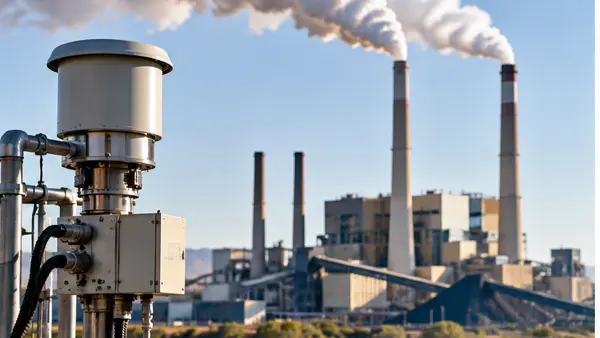
Twenty-one states, joined by several cities and other jurisdictions, have filed a federal lawsuit challenging the Trump administration’s repeal of greenhouse gas limits for coal- and natural gas-fired power plants.
The October 1 lawsuit challenges an Environmental Protection Agency (EPA) decision announced September 14. The administration says eliminating the requirements will make electricity more affordable and reliable. The states argue the agency is abandoning an important responsibility under federal environmental law.
The dispute could influence not only how power plants are regulated today, but also whether future administrations can impose new limits on their greenhouse gas emissions.
Background
Electricity generation is one of America’s major sources of carbon dioxide, the principal greenhouse gas produced by burning fossil fuels. Coal-fired plants generally produce more carbon dioxide per unit of electricity than natural gas plants, although both contribute to climate change.
In 2024, the Biden administration adopted new Carbon Pollution Standards under the Clean Air Act. A central requirement involved reducing emissions from certain existing coal plants and new natural gas plants using technologies such as carbon capture and storage.
Carbon capture systems separate carbon dioxide from industrial emissions so it can be transported and stored underground rather than released into the atmosphere. The technology exists, but installing it at power plants can be expensive and requires suitable transportation and storage infrastructure.
Power companies and Republican officials challenged the Biden rules, arguing that they depended too heavily on technologies that had not been demonstrated economically at the required scale. Environmental organizations supported the standards as a way to reduce long-term emissions from fossil-fuel electricity generation.
On September 14, the Trump EPA finalized a partial repeal of the 2024 standards. It also proposed a further action that would eliminate remaining federal greenhouse gas requirements for fossil-fuel power plants under the relevant Clean Air Act provision.
What the Lawsuit Challenges
New York Attorney General Letitia James is leading the coalition challenging the repeal in the U.S. Court of Appeals for the District of Columbia Circuit. Participating jurisdictions include California, Michigan, the District of Columbia, New York City, Chicago and Denver.
The plaintiffs argue that EPA cannot simply abandon emissions controls without adequately considering the climate and health consequences. They also challenge the agency’s reasoning for removing standards developed through an earlier rulemaking process.
The case raises questions about the agency’s obligations under the Clean Air Act, including how it determines whether emissions controls are technically achievable and economically reasonable.
A separate regulatory proposal could have even broader consequences. EPA is seeking to withdraw the basis for regulating greenhouse gas emissions from power plants under Section 111 of the Clean Air Act.
What Different Sides Are Saying
The Trump Administration: Lower Costs and Reliable Electricity
EPA Administrator Lee Zeldin argues that the previous standards imposed unnecessary costs on electricity producers while threatening the reliability of the power grid. The administration considers coal and natural gas particularly important for providing electricity when renewable generation is unavailable.
EPA estimates that its September repeal could generate up to $310 billion in savings, including avoided compliance costs and broader economic benefits.
Fact-check: The $310 billion figure is an EPA projection, not money already saved or a guaranteed reduction in household electricity bills. Actual savings depend on how power companies would otherwise have complied with the rules, future fuel prices, electricity demand and other factors.
The administration also argues that limiting emissions from U.S. power plants would have little effect on global temperatures without comparable reductions in other countries.
Fact-check: Climate change depends on accumulated greenhouse gas emissions from all sources worldwide. Reductions from any single sector or country cannot independently solve the problem, but that does not mean they have no effect. The policy question includes how to weigh their benefits against economic costs.
The Challenging States: Environmental Protection and Legal Responsibility
The coalition argues that removing federal limits will allow greater long-term carbon pollution and undermine efforts to reduce climate-related damage from extreme heat, flooding, wildfires and other hazards.
The states also contend that EPA has not adequately justified its departure from the previous standards or meaningfully considered alternative approaches.
Fact-check: Repealing the federal standards does not eliminate every environmental requirement applicable to power plants. Facilities may remain subject to other federal rules, state regulations and local requirements. The lawsuit concerns specific federal greenhouse gas standards and EPA’s authority and reasoning for repealing them.
Environmental and public-health organizations supporting the litigation argue that delaying emissions reductions can increase future climate risks and associated economic costs.
Electricity Producers and Consumers
Utilities must balance electricity prices, reliability, environmental requirements and investment in new generating capacity. Some producers favor fewer federal restrictions because they provide flexibility to operate existing plants and avoid expensive retrofits.
Others have already committed to retiring coal plants or expanding alternative energy sources for economic and operational reasons that extend beyond federal regulation.
Fact-check: A regulatory rollback does not necessarily mean coal generation will increase substantially. Electricity markets are also shaped by natural gas prices, renewable-energy costs, aging equipment, grid demand and state energy policies.
What Happens Next?
The appeals court will consider whether EPA followed federal law when repealing the standards. The court could uphold the repeal, send it back for further explanation or invalidate parts of the agency’s action.
Meanwhile, the administration’s separate proposal to remove remaining greenhouse gas requirements is proceeding through a regulatory process that includes public comments. EPA held hearings on October 1 and 2.
The legal outcome could influence the flexibility of future presidents to change major environmental regulations.
Note on Scope
The October 1 lawsuit is a challenge to the repeal, not a judicial finding that the EPA acted unlawfully. This article does not attempt to independently calculate the financial costs of emissions controls or the climate damages associated with removing them.
The administration’s projected savings and the plaintiffs’ anticipated environmental harms involve different assumptions and time horizons. Neither should be treated as a directly observed outcome of the repeal.
Related Links
- Reuters: States Challenge EPA Repeal
- Associated Press: States and Cities Sue EPA
- EPA: September 2026 Repeal Announcement
- EPA: Power Plant Greenhouse Gas Standards
- EPA: Supporters of the Regulatory Rollback
Discussion Questions
- How should the government balance electricity affordability with reducing greenhouse gas emissions?
- Should federal environmental regulations consider global climate benefits or primarily domestic economic effects?
- How much evidence should regulators need before requiring expensive new technologies?
- Should states have greater authority than the federal government over power plant emissions?
- How should policymakers evaluate cost-saving estimates produced by government agencies?
- Would removing federal emissions limits necessarily increase the use of coal?
- How should electricity reliability influence climate regulations?
- Should an incoming administration be able to reverse major environmental rules established by its predecessor?
- What role should courts play in reviewing technical decisions made by federal agencies?
- What additional evidence would help you decide whether the EPA repeal is justified?
