
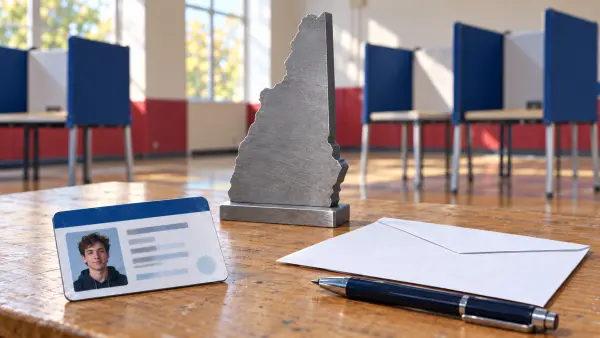
The U.S. Supreme Court on October 22 allowed New Hampshire to exclude student identification cards from the voting process for the November midterms, including their use as backup evidence of a voter’s identity. The emergency decision pauses a lower-court order while litigation continues; it does not finally resolve the challenge to the state’s restrictions.
The Associated Press reported that Justice Ketanji Brown Jackson was the only justice to publicly dissent. The immediate effect is to restore the state’s stricter approach ahead of the November 3 election.
Background: two different identification questions
New Hampshire passed a law this year removing student cards from its expressly accepted forms of voter identification. But state law also contains a fallback process, sometimes called a safety valve, under which election officials can consider other evidence when a voter lacks a qualifying ID.
The dispute reaching the Supreme Court concerned that second route. Secretary of State David Scanlan directed local officials not to consider student IDs even through the fallback process. A lower court blocked that directive without blocking the underlying law removing student cards from the approved list.
As Scripps News explained, the question was whether a student card could be considered alongside other evidence. It was therefore narrower than a dispute over whether showing a campus card automatically entitled someone to a ballot.
Why the Supreme Court intervened
In its October 22 emergency order, the court invoked the principle that lower federal courts should ordinarily avoid changing election rules close to an election. It said the district court had not justified departing from that principle.
The order stayed the district court’s October 2 and October 5 preliminary injunctions pending appellate proceedings and any timely Supreme Court review. That procedural posture matters: allowing enforcement during an appeal is different from issuing a final decision that every aspect of a law is constitutional.
What different sides are saying
The state’s position: Its legal effort seeks consistent enforcement of the student-ID restriction, including the directive governing alternative evidence. The Supreme Court’s order supports its immediate request to prevent the lower-court intervention from operating before Election Day.
The challengers’ position: Voting advocates argue that the directive went beyond the statute by excluding evidence that could otherwise help officials identify voters. Democracy Docket’s account of their filing describes their argument that the fallback provision permits consideration of other evidence.
The practical concern: Some students lack a driver’s license or do not have a passport readily available, according to the plaintiffs’ arguments summarized by the New Hampshire Bulletin. Excluding a campus card may make proving identity more difficult for those voters.
What the ruling does and does not establish
The decision changes which documents officials may consider. It does not make students categorically ineligible to vote, nor does a student card by itself settle every question of eligibility. The continuing lawsuit concerns how the state may regulate identification within that broader process.
The next legal question is whether the restriction survives further review. The immediate administrative challenge is giving voters and local election officials clear, consistent instructions before November 3.
