
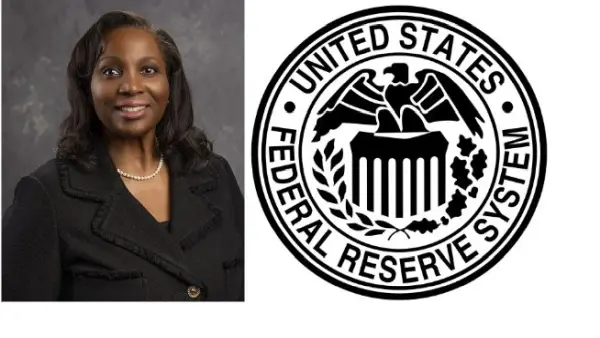
The White House has renewed its effort to remove Lisa Cook from the Federal Reserve’s Board of Governors. In a letter dated August 5, Deputy Chief of Staff Dan Scavino, who also directs the Office of Presidential Personnel, notified Cook that the president is considering removing her.
The letter states that pursuant to the Supreme Court’s June 29 opinion, Cook is provided notice that the president is considering removal because there is sufficient reason to believe she made false statements on one or more mortgage agreements. It gives her 21 days to respond through the Director of Presidential Personnel, with a deadline of August 26.
Scavino wrote that Cook has known of the allegations since at least August 25, 2025, and that in more than ten months she has never provided an explanation despite ample opportunity. He argued there is a distinct nexus between basic trustworthiness in financial matters and the duties of a Fed governor. The letter adds that the conduct may be sufficient to demonstrate a crime, and separately that it shows negligence incompatible with service on the board even if no crime occurred.
Cook’s attorneys, Abbe Lowell and Norm Eisen, confirmed she received the letter. They said the allegations are as baseless now as they were a year ago, when they say the president tried to remove her to interfere with the independence of the Federal Reserve, and that they will challenge what they called this latest pretext.
Background
The allegations originate in a criminal referral sent to the Justice Department in August 2025 by Bill Pulte, then director of the Federal Housing Finance Agency. Pulte alleged that Cook designated two properties, a house in Michigan and a condominium in Georgia, as her primary residence on mortgage applications in 2021, before she joined the Fed, obtaining more favorable loan terms than she was entitled to.
Scavino’s letter adds detail. It says Cook signed a document stating she intended to use the Michigan property as her principal residence, then two weeks later purchased the Atlanta condominium and made the same statement about it, and that she later listed the Atlanta property for rent without disclosing rental income in her financial disclosures. The president, the letter says, believes it is inconceivable she was unaware of the first commitment when making the second.
Cook has denied wrongdoing and has not been charged with any crime. In a letter to then-Attorney General Pam Bondi, Lowell wrote that the case rests largely on one stray reference in a document from 2021. Cook has described the matter as clerical errors.
Trump announced Cook’s firing on August 25, 2025, the first time in the Fed’s 112-year history that a president has sought to remove a governor. Cook sued, and a district judge blocked the removal in September 2025.
What the Supreme Court Actually Decided
On June 29, 2026, the Supreme Court upheld that block 5 to 4. Chief Justice John Roberts wrote that allowing the removal would in effect transform the Fed’s for-cause protection into at-will employment.
The ruling was procedural. It held that Cook was entitled to notice of the allegations and an opportunity to respond before removal. It did not decide whether the mortgage allegations constitute cause, and it did not evaluate whether they are true. Roberts noted in a footnote that nothing in the opinion prevented the president from trying again with proper procedure.
The August 5 letter is an attempt to take those steps.
What Different Sides Are Saying
The administration says it is following the process the Court required. The letter says so explicitly, and on its face it provides notice and a response window. Whether a written submission to the Director of Presidential Personnel satisfies what the Court had in mind is untested. The Court described notice and an opportunity to respond without specifying the form, and the official receiving the response works for the person weighing the removal.
The administration argues the conduct is disqualifying even if not criminal. This is the most consequential move in the letter. It relocates the question from whether Cook committed a crime, which no prosecutor has charged, to whether her conduct shows negligence incompatible with the office. That is a lower bar and a more subjective one, and it is the argument most likely to be tested in court, because a standard that broad is what Roberts warned could hollow out the protection.
Cook’s side says this is about interest rates. Cook has argued the White House targeted her because she refused to let political pressure dictate her votes. This is a claim about motive and cannot be established from the public record. What can be said is that Pulte, while serving as housing regulator, repeatedly urged rate cuts and called for then-Chair Jerome Powell to resign, and made the referral in that period. Those facts are consistent with the pretext argument without proving it.
On the ten months of silence. Scavino’s letter treats Cook’s failure to explain as itself significant. Her side responds that she did address the allegations in the letter to Bondi, and that a person facing a criminal referral has obvious reasons not to litigate it through press statements. Both points are accurate.
What is at stake beyond one seat. If Cook is removed, the president would appoint a fourth member of the seven-member board, securing a majority. Supporters and critics of the removal both acknowledge this, and it is why the case draws attention disproportionate to a single personnel dispute.
On the word unproven. Several outlets describe the allegations as unproven. That is accurate and is not the same as false. No charge has been brought and no court has evaluated the merits.
Note on Scope
Cook remains in her position. As of this writing the August 26 deadline has not passed and no removal has been ordered.
Reporting indicates the Supreme Court will hear argument in the underlying case in January, and that the matter also returns to the lower courts for a determination on whether the allegations meet the statutory standard. We have not independently confirmed the argument date.
Sources describe Scavino’s title variously as Deputy Chief of Staff, Assistant to the President, and Director of the Office of Presidential Personnel. He appears to hold all three. Pulte is described in some accounts as the current FHFA director and in others as a former one, and he has also served as acting Director of National Intelligence during this period.
Related Links
- Trump informs Lisa Cook that he is considering her removal (SCOTUSblog)
- White House renews its attempt to remove Fed Governor Lisa Cook (CNN Business)
- Trump mounts new effort to oust Lisa Cook from Fed board (CBS News, quoting the letter at length)
- Trump renews effort to oust Cook from Federal Reserve Board (Consumer Finance Monitor, a law firm publication)
- Trump revives effort to fire Fed’s Lisa Cook (CNBC)
- President Trump weighing renewed push to fire Fed’s Lisa Cook (Fox Business)
- Cook says mortgage fraud allegations against her are baseless (Associated Press via PBS)
Discussion Questions
- Should a president be able to remove a central bank official at all?
- What should count as cause for removing someone from a protected position?
- Is conduct from before someone took office relevant to fitness for it?
- Is 21 days and a written submission a meaningful opportunity to respond?
- Should the official reviewing her response work for the person considering the removal?
- Who should decide whether a stated reason is the real reason?
- Does it matter that no criminal charge has been brought?
- Why might a country want its central bank insulated from elected officials?
- Is it a problem that removing one person would give a president a board majority?
- Imagine you are a Fed governor watching this. Does it change how you vote on interest rates?
