
What Happened
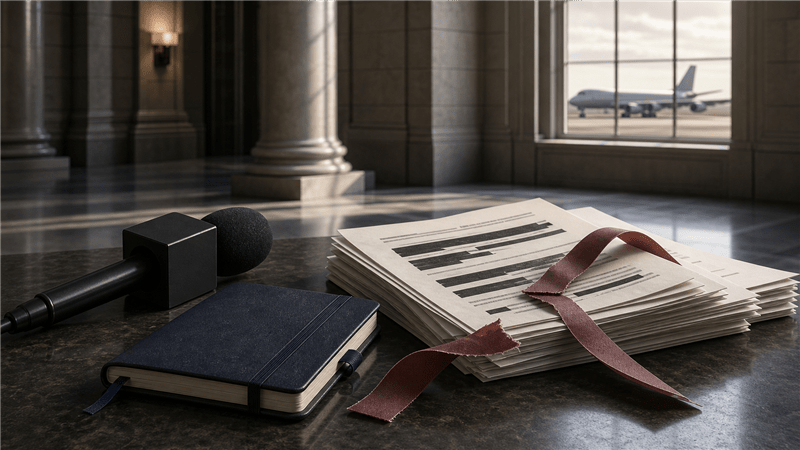
On July 23, 2026, the Justice Department withdrew subpoenas that sought testimony and phone records from New York Times journalists who reported on security concerns involving a Qatari-gifted aircraft used as Air Force One.
U.S. District Judge Arun Subramanian sharply questioned prosecutors during a hearing in Manhattan. He focused on whether the government had taken reasonable investigative steps before seeking information from journalists, whether several phone-record subpoenas reached the journalists’ relatives by mistake, and whether statements made while obtaining the subpoenas were accurate.
After the government withdrew the demands, Subramanian issued a brief order stating that the challenged subpoenas were null and void. The judge did not decide that reporters can never be subpoenaed, and the Justice Department said its investigation into possible leaks of classified information remains active.
Background
The dispute began after the Times published articles on July 8 and 9 about the aircraft donated by Qatar and modified for presidential use. Citing anonymous sources, the newspaper reported that President Donald Trump returned from a NATO summit in Turkey on an older Air Force One aircraft because the newer plane lacked some security capabilities. Trump publicly denied that security concerns caused the change.
On July 10, federal agents served three Times reporters with grand-jury subpoenas at their homes. The newspaper asked the court to quash, or cancel, the demands. Additional court filings showed that the government also sought communications records associated with journalists, two spouses, and one reporter’s mother. Some requests covered records beginning January 1, months before the July articles.
The Times argued that the demands were overly broad, retaliatory, and harmful to confidential newsgathering. The Justice Department answered that the reporters were not the investigation’s targets and that officials were trying to identify people suspected of leaking classified information.
What Rules Apply to Reporter Subpoenas?
The First Amendment protects freedom of the press, but it does not give every journalist an absolute right to refuse every grand-jury subpoena. In Branzburg v. Hayes, the Supreme Court held in 1972 that reporters generally must respond to subpoenas seeking relevant evidence in a good-faith criminal investigation.
That rule does not give prosecutors unlimited power. Courts supervise grand juries and can reject subpoenas that are abusive, excessively broad, or issued for an improper purpose. Federal appellate law in New York also recognizes protections for journalistic material in some circumstances.
The Justice Department’s own policy, found in Section 50.10 of Title 28 of the Code of Federal Regulations and its Justice Manual, adds procedural protections. Attorney General authorization is generally required before prosecutors subpoena a journalist or seek a journalist’s communications records from a third party. The information must be essential rather than speculative. Prosecutors should first make reasonable attempts to obtain it from alternative sources, and demands should be as narrow as possible.
These internal rules protect newsgathering, but they do not create a blanket immunity for journalists or prevent investigations into unauthorized disclosures of classified information.
Why the Judge Objected
Subramanian repeatedly asked why prosecutors sought journalist records before completing other investigative work. He said such subpoenas should be a last step, not an opening step. A prosecutor acknowledged that some additional investigative steps had not been identified before the subpoenas were issued.
The judge also questioned subpoenas associated with two reporters’ spouses and one reporter’s mother. The government said law-enforcement databases had linked those phone numbers to the journalists. During the hearing, a prosecutor acknowledged that seeking relatives’ records was an error caused by moving quickly.
Another issue concerned the accuracy of government submissions. According to courtroom reporting, one application described the investigation as nonpublic after the Times had already reported that subpoenas had been served. A prosecutor called the wording imprecise. Subramanian raised the possibility of sanctions while questioning whether other statements to the court could be trusted.
The hearing ended without a formal sanctions ruling. The government withdrew the subpoenas, and the court declared them void.
What Different Sides Are Saying
The Justice Department’s position
The Justice Department says the underlying investigation concerns classified leaks and national security, not punishment of reporters. After the hearing, a department spokesperson said the judge prevented prosecutors from fully presenting what the department described as a careful investigative process. The department also said it would continue pursuing people responsible for unlawful disclosures.
Fact check: The investigation remains open, and the withdrawal does not prevent prosecutors from pursuing suspected leakers. However, the judge found serious problems with the process used for these subpoenas and indicated that he would have granted the Times’ motion to quash if the government had not withdrawn them.
Before the hearing, prosecutors said they had complied with department regulations and had taken investigative steps before seeking journalist information. They also said mistaken phone-number associations came from a law-enforcement database and would not be pursued once identified.
Fact check: A database error may explain why relatives’ numbers were included, but it does not by itself establish that the resulting subpoenas met narrowness and verification requirements. In court, a prosecutor accepted responsibility for the error.
The New York Times and press-freedom position
The Times said the subpoenas were intended to intimidate its journalists and expose confidential sources. Its lawyers pointed to demands covering months of records and the inclusion of relatives’ accounts as evidence that the requests went beyond the July Air Force One articles.
Fact check: Some subpoenas did seek records beginning January 1, and records connected to three relatives were sought. Those facts support the claim that the demands were broad. Retaliatory intent, however, was alleged by the Times and was not established in a final court ruling.
Press advocates argue that forcing journalists to identify confidential sources can discourage government employees from reporting misconduct or safety concerns to the public.
Fact check: The risk of chilling confidential sources is widely recognized and helps explain DOJ’s special rules. Still, federal law does not provide journalists with an absolute privilege against all subpoenas, especially in good-faith criminal investigations.
Fact Check
- Claim: The court ruled that journalists can never be subpoenaed. False. The dispute concerned these subpoenas and the procedures used to obtain them.
- Claim: The judge issued a final ruling that DOJ retaliated against the Times. False. The Times alleged retaliation, but the subpoenas were withdrawn before such a merits ruling.
- Claim: The subpoenas remain enforceable. False. The court declared the withdrawn subpoenas null and void.
- Claim: The classified-leak investigation has ended. False. DOJ says the investigation is continuing.
- Claim: The First Amendment creates an absolute reporter-source privilege. False. The Supreme Court rejected a blanket privilege in the grand-jury context, although other legal and procedural protections can apply.
What Happens Next?
The Justice Department could continue investigating government employees or other possible sources using different evidence. It could also seek new subpoenas if it follows the applicable procedures and can justify the scope. Any renewed demands would likely face another court challenge.
The controversy may also increase pressure on Congress to consider a federal reporter shield law. Supporters say such legislation would protect confidential newsgathering. Opponents argue that broad protection could interfere with investigations involving national security or serious crimes.
For now, the immediate legal demands against the Times journalists are over, but the larger conflict between leak investigations and press freedom remains unresolved.
Related Links
- Associated Press report on the withdrawal and court hearing
- CBS News report with the court order and responses from both sides
- Justice Department manual on obtaining evidence from news media
- Associated Press background on the Times’ motion to quash
- Associated Press report on phone-record demands involving relatives
- Supreme Court opinion in Branzburg v. Hayes
Discussion Questions
- Have confidential sources shaped news you follow?
- Which procedural safeguard seems most important?
- When should prosecutors subpoena a journalist?
- How narrow should a phone-record request be?
- Does the January start date affect your view?
- How should courts weigh press freedom and national security?
- Which fact-check clarified the dispute most?
- Should Congress adopt a federal reporter shield law?
- Why do leak investigations create recurring conflicts?
- If you were the judge, what conditions would you require for a new subpoena?
