
What Happened
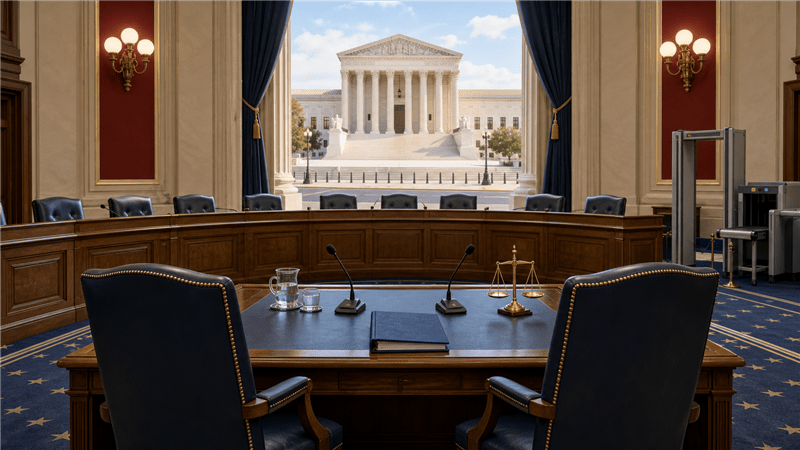
Supreme Court Justices Amy Coney Barrett and Elena Kagan are scheduled to testify before House and Senate appropriations subcommittees on July 14, 2026. The hearings concern the Supreme Court’s fiscal year 2027 budget request. They will be the first public congressional budget appearances by sitting justices since 2019.
The Senate hearing is scheduled for 2 p.m. in the Financial Services and General Government Subcommittee. A House subcommittee is also scheduled to hear from the two justices earlier that day. Barrett is generally associated with the Court’s conservative wing, while Kagan is generally associated with its liberal wing. Their joint appearance gives Congress an opportunity to question representatives from different parts of the Court about shared institutional needs.
This is a budget hearing, not a review of a particular case. Lawmakers may ask about security, court operations, technology, ethics, or public access, but the justices are not expected to debate the merits of pending cases or defend individual votes. The scope will depend on the questions asked and on what Barrett and Kagan choose to answer.
Background
The Constitution creates three separate branches of the federal government. The Supreme Court is part of the judicial branch, but Congress controls federal appropriations. That means the Court must ask lawmakers for money to pay employees, operate and protect its building, provide security for the justices, maintain technology, and perform other administrative work.
Justices have appeared before congressional appropriators in the past, usually to discuss funding rather than judicial decisions. Kagan and Justice Samuel Alito testified in 2019. More recent congressional requests for testimony have sometimes focused on ethics and transparency, and Chief Justice John Roberts has declined some invitations. The July 14 appearances therefore carry significance beyond the numbers even though funding is their formal subject.
The hearings also come after a consequential Supreme Court term and years of public debate about ethics, security, and institutional trust. The Court adopted a Code of Conduct for Justices in 2023. In 2026 it also introduced software intended to improve conflict checks in cases. Critics continue to seek stronger enforcement and greater disclosure, while defenders of the Court warn that aggressive congressional pressure can threaten judicial independence.
What the Court Is Requesting
The judiciary’s official budget summary says the Supreme Court is requesting about $210.3 million for salaries and expenses in fiscal year 2027. That includes approximately $207 million in discretionary funding and $3.3 million in mandatory expenses. The discretionary request is 7.2 percent above the assumed fiscal year 2026 level.
The request includes $18.9 million and 96 full-time-equivalent positions for program increases. The largest item is $14.6 million and 84 positions to expand personal protection for the nine justices. According to the budget document, this would add six agents per justice, create administrative support, and provide more travel security outside the Washington region.
The Court is separately requesting about $18.1 million for care of its building and grounds, up from an enacted $11.4 million. The main program increase is $6.5 million for design work on an exterior visitor-screening facility. The proposal is intended to move screening outside the building’s main entrances following physical-security assessments.
Fact-check note: The proposal is not simply a pay raise for the justices. Most of the identified program growth is tied to protective personnel and visitor screening. Congress can approve, reduce, reject, or modify the requested amounts through the appropriations process.
What Different Sides Are Saying
Supporters of the request: They argue that threats against judges and public officials justify stronger protection. From this perspective, security funding protects the Court’s ability to operate independently and allows justices to perform their duties without intimidation. They also point to professional security assessments supporting changes to visitor screening.
Budget skeptics: Some lawmakers may ask whether the requested staffing increase is proportionate, whether current security resources are being used efficiently, and why the building account would rise by more than half. Congressional oversight normally includes testing an agency’s assumptions rather than accepting every request at face value.
Transparency and ethics advocates: Some see the rare testimony as an opportunity to ask broader questions about financial disclosures, recusals, gifts, enforcement of the Court’s ethics code, and public confidence. They argue that Congress funds the Court and may ask how public money and institutional safeguards are managed.
Judicial-independence advocates: Others warn that a budget hearing should not become a political interrogation about unpopular rulings. Federal judges are insulated from electoral pressure so that legal decisions do not depend on congressional approval. They argue that oversight of spending is legitimate but attempts to punish the Court for decisions could cross a constitutional line.
Fact Check
Claim: Congress has no authority to question the Supreme Court about money.
Finding: False. Congress appropriates funds for the judicial branch and may hold hearings about budget requests.
Claim: Barrett and Kagan are being called to reverse or reconsider recent rulings.
Finding: False. The announced subject is the fiscal year 2027 budget. Congressional testimony cannot reverse a Supreme Court decision.
Claim: Supreme Court justices never testify before Congress.
Finding: False. Such appearances are uncommon but have occurred, especially in budget hearings. The most recent public appearance was in 2019.
Claim: The entire requested increase is for personal security.
Finding: False. Personal protection is the largest identified program increase, but the request also covers base operations, technology, staff, and a separate visitor-screening project.
Claim: Congress may reduce the justices’ salaries because it dislikes their rulings.
Finding: Misleading. The Constitution protects federal judges’ compensation from being reduced while they remain in office. Congress still controls many other judicial operating appropriations.
What to Watch
The most concrete questions concern staffing, the cost of expanding the protection unit, travel security, and the proposed visitor-screening facility. Lawmakers may also ask how the Court measures risk and coordinates with the Supreme Court Police, U.S. Marshals Service, Capitol Police, and other agencies.
The hearings may also show how Barrett and Kagan describe the boundary between financial oversight and judicial independence. If ethics or recent rulings arise, their answers or refusals to answer could become as politically important as the budget figures. Until the hearings occur, however, reports about what they will say remain predictions.
Related Links
- Senate hearing page and schedule (U.S. Senate Appropriations Committee)
- Fiscal year 2027 congressional budget request documents (U.S. Courts)
- Fiscal year 2027 judiciary budget summary (PDF)
- Background on the rare congressional appearances (Roll Call)
- Court security and the budget increase (The Washington Post)
- Code of Conduct for Justices (Supreme Court of the United States)
Discussion Questions
- Why does Congress fund a separate branch of government?
- Which part of the Court’s request seems most important?
- How should lawmakers evaluate a security request?
- Should ethics questions be raised at a budget hearing?
- Where is the line between oversight and political pressure?
- Have security concerns changed public life where you live?
- Why are public hearings useful in the appropriations process?
- Should justices appear before Congress more often?
- What information should the Court publish about its spending?
- Imagine you are a committee member. What would you ask first?
