
How Redistricting Works
Every 10 years, the United States carries out a census, an official count of everyone living in the country. The most recent census was in 2020, and the next is scheduled for 2030. The population numbers from the census trigger a process called reapportionment, in which the 435 seats in the U.S. House of Representatives are divided among the 50 states based on how many people live in each one. States that grow quickly may gain seats, and states that grow slowly or lose population may lose seats.
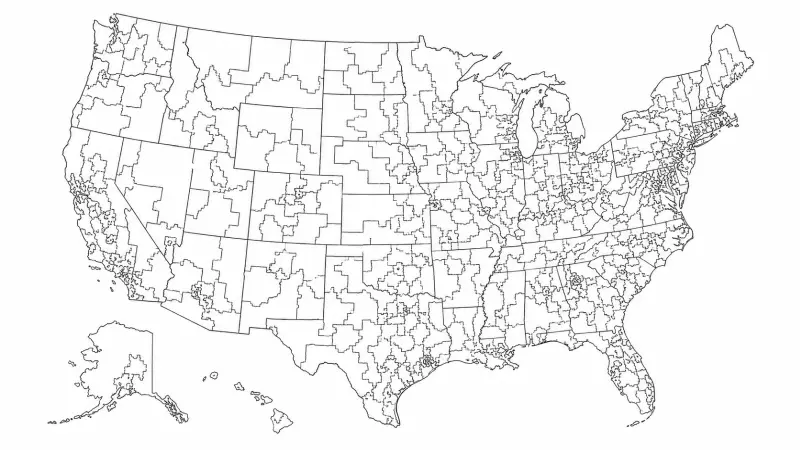
After reapportionment, states with more than one House seat must redraw the boundaries of their congressional districts. This process is called redistricting. New districts must have roughly equal populations, a rule known as one person, one vote. In most states, the state legislature draws these maps, subject to the governor’s signature. Some states use an independent redistricting commission instead, a body usually made up of citizens rather than elected officials, created specifically to reduce the influence of whichever party controls the legislature.
New maps can be challenged in court, most often under the U.S. Constitution or the federal Voting Rights Act, a 1965 law that bars states from drawing districts that weaken the voting power of a racial minority group, a practice known as vote dilution. Courts first decide whether such a claim is justiciable, meaning it is the kind of dispute a court is allowed to resolve, and when a claim goes to trial, courts sometimes apply strict scrutiny, the most demanding level of judicial review, to maps where race appears to be the main factor in how the lines were drawn.
When district lines are drawn to unfairly favor one group over another, this is called a gerrymander. The word dates to 1812, when Massachusetts Governor Elbridge Gerry signed a state senate map that included a district so oddly shaped that a newspaper cartoonist compared it to a salamander. The blended word has described unfair district lines ever since. Lawyers and political scientists usually separate two types: partisan gerrymandering, which favors one political party, and racial gerrymandering, which weakens the voting power of a racial group. The two are treated very differently under the law, as explained below.
For most of the 20th century, many states left their district lines unchanged for decades even as populations shifted, giving rural voters far more influence than urban voters. The Supreme Court intervened in two major rulings: Baker v. Carr (1962), which held that unequal districts could be challenged in federal court, and Wesberry v. Sanders (1964), which established the one person, one vote requirement for congressional districts. Later, in Shaw v. Reno (1993), the Court ruled that a district drawn predominantly on the basis of race must survive strict scrutiny, and in Allen v. Milligan (2023), the Court reaffirmed that Section 2 of the Voting Rights Act still requires states to avoid diluting the vote of a racial group, upholding a finding that Alabama likely needed to draw a second Black-majority district.
Partisan gerrymandering has a different legal history. In Rucho v. Common Cause (2019), the Supreme Court ruled 5-4 that partisan gerrymandering claims present a political question beyond the reach of federal courts, because no clear, workable standard exists for deciding how much partisan advantage is too much. That ruling set a precedent that has shaped every redistricting fight since: racial gerrymandering can still be challenged in federal court, but complaints that a map is unfair to a political party generally cannot.
The Current Fight Over District Maps
Redistricting is supposed to happen once per decade, right after the census. What made 2025 unusual is that Texas redrew its congressional map in the middle of the decade, a practice known as mid-decade redistricting, years ahead of the next scheduled count. At the urging of President Trump, who wanted to protect the Republican House majority ahead of the 2026 midterm election, the Texas legislature passed a new map targeting five Democratic-held seats in South Texas, Houston, and Dallas. Because Republicans control both the Texas legislature and the governorship, no ballot measure vote of the public was required to approve the change, though the map has faced separate legal claims that it weakens the voting power of racial minority groups in those districts, claims that are still working through the courts and have not been finally resolved.
California, which normally draws its maps through an independent redistricting commission rather than its legislature, responded differently. In a November 2025 special election, California voters approved Proposition 50, a ballot measure that temporarily replaced the commission’s maps with new, Democratic-favorable district lines intended to offset the seats Texas gained. Both the Texas and California maps reached the Supreme Court, which allowed each state to use its new map for the 2026 midterms.
Supporters of Texas’s move argue that states have always had the constitutional authority to redraw their maps whenever they choose, not only after a census, and that Texas simply exercised power that Rucho confirmed the courts will not second-guess. Critics argue that redistricting purely for partisan advantage, especially outside the normal ten-year cycle, undermines the basic democratic idea that voters choose their representatives rather than the other way around. Supporters of Proposition 50 describe it as a defensive, voter-approved response needed to keep the two parties on equal footing. Critics, including some who otherwise favor independent commissions, argue that using a temporary partisan map to counter another state’s partisan map normalizes the practice nationally and moves both parties further from neutral, nonpartisan map-drawing. Because an incumbent officeholder’s chances of reelection can depend heavily on how a district is drawn, both parties have strong incentives in this debate, and observers disagree about whether the current system, in which federal courts stay out of partisan disputes under Rucho, serves voters well.
Glossary
census (noun): an official count of a country’s population, taken every 10 years in the United States.
Translations: 人口普查 (rénkǒu pǔchá) | 国勢調査 (kokusei chōsa) | 인구 조사 (ingu josa) | जनगणना (janaganana) | تعداد السكان (ta’dad al-sukkan) | перепись населения (perepis’ naseleniya) | censo | recensement
- The census showed that some states had grown much faster than others.
- Every household is legally required to respond to the census.
reapportionment (noun): redividing the 435 seats in the U.S. House of Representatives among the states based on population.
Translations: 议席重新分配 (yìxí chóngxīn fēnpèi) | 議席再配分 (giseki saihaibun) | 의석 재배분 (uiseok jaebaebun) | सीटों का पुनर्वितरण (seaton ka punarvitaran) | إعادة توزيع المقاعد (i’adat tawzi’ al-maqa’id) | перераспределение мест (pereraspredeleniye mest) | reasignación de escaños | redistribution des sièges
- After reapportionment, Texas gained two new House seats.
- Reapportionment happens automatically after each census, following a fixed formula.
redistricting (noun): the process of redrawing the boundary lines of voting districts.
Translations: 重划选区 (chóng huà xuǎnqū) | 選挙区再編 (senkyoku saihen) | 선거구 재조정 (seongeogu jaejojeong) | निर्वाचन क्षेत्र पुनर्निर्धारण (nirvachan kshetra punarnirdharan) | إعادة ترسيم الدوائر الانتخابية (i’adat tarsim al-dawa’ir al-intikhabiyya) | перекройка избирательных округов (perekroyka izbiratel’nykh okrugov) | redistribución de distritos | redécoupage électoral
- State lawmakers began redistricting soon after the census results were released.
- Redistricting can change which candidates are likely to win a given seat.
one person, one vote (principle): the constitutional principle that voting districts must have roughly equal populations.
Translations: 一人一票原则 (yī rén yī piào yuánzé) | 一人一票の原則 (ichinin ippyō no gensoku) | 1인 1표 원칙 (il-in ilpyo wonchik) | एक व्यक्ति, एक वोट (ek vyakti, ek vote) | مبدأ صوت واحد لكل شخص (mabda’ sawt wahid likull shakhs) | принцип “один человек, один голос” (printsip “odin chelovek, odin golos”) | una persona, un voto | une personne, une voix
- The Supreme Court established one person, one vote in a pair of rulings in the 1960s.
- Districts with wildly different populations would violate one person, one vote.
redistricting commission (noun): an independent body, often made up of citizens, that draws district maps instead of elected officials.
Translations: 选区划分委员会 (xuǎnqū huàfēn wěiyuánhuì) | 選挙区画定委員会 (senkyoku kakutei iinkai) | 선거구 획정 위원회 (seongeogu hoekjeong wiwonhoe) | निर्वाचन क्षेत्र आयोग (nirvachan kshetra ayog) | لجنة ترسيم الدوائر الانتخابية (lajnat tarsim al-dawa’ir al-intikhabiyya) | комиссия по перекройке округов (komissiya po perekroyke okrugov) | comisión de redistribución de distritos | commission de redécoupage électoral
- California normally relies on a redistricting commission rather than its legislature.
- Supporters say a redistricting commission reduces partisan influence over the map.
Voting Rights Act (proper noun): a 1965 federal law that bans racial discrimination in voting, including in redistricting.
Translations: 《投票权法》(tóupiào quán fǎ) | 投票権法 (tōhyōken hō) | 투표권법 (tupyogwonbeop) | मतदान अधिकार अधिनियम (matdan adhikar adhiniyam) | قانون حقوق التصويت (qanun huquq al-taswit) | Закон об избирательных правах (Zakon ob izbiratel’nykh pravakh) | Ley de Derecho al Voto | Loi sur le droit de vote
- The Voting Rights Act was passed in 1965 to address decades of racial discrimination in voting.
- A map that dilutes minority voting power may violate the Voting Rights Act.
dilution (noun): weakening the voting power of a group, usually by spreading its voters across many districts or packing them into few.
Translations: 投票权稀释 (tóupiào quán xīshì) | 投票力希釈 (tōhyōryoku kishaku) | 투표력 희석 (tupyoryeok huiseok) | मतदान शक्ति का कमजोर होना (matdan shakti ka kamzor hona) | تخفيف قوة التصويت (takhfif quwwat al-taswit) | размывание избирательной силы (razmyvaniye izbiratel’noy sily) | dilución del voto | dilution du vote
- Civil rights groups accused the state of vote dilution in its new map.
- Courts examine whether a map causes dilution of a minority group’s voting power.
justiciable (adjective): capable of being decided by a court.
Translations: 可由法院审理的 (kě yóu fǎyuàn shěnlǐ de) | 司法審査可能な (shihō shinsa kanō na) | 사법 심사가 가능한 (sabeop simsaga ganeunghan) | न्यायालय में विचारणीय (nyayalaya mein vicharniya) | قابل للتقاضي (qabil lil-taqadi) | подсудный (podsudny) | justiciable | justiciable
- The Court ruled that racial gerrymandering claims are justiciable, but partisan ones are not.
- Whether an issue is justiciable determines if a federal court can even hear the case.
strict scrutiny (legal standard): the most demanding level of judicial review, used when a law or map may be based mainly on race.
Translations: 严格审查标准 (yángé shěnchá biāozhǔn) | 厳格審査基準 (genkaku shinsa kijun) | 엄격 심사 기준 (eomgyeok simsa gijun) | कठोर न्यायिक जांच मानक (kathor nyayik janch maanak) | معيار التدقيق الصارم (mi’yar al-tadqiq al-sarim) | стандарт строгого контроля (standart strogogo kontrolya) | escrutinio estricto | contrôle strict
- A district drawn predominantly by race must survive strict scrutiny.
- Few maps survive strict scrutiny once race is shown to be the predominant factor.
gerrymander (noun or verb): to draw a voting district in a way that unfairly favors one party or group.
Translations: 操纵选区划分 (cāozòng xuǎnqū huàfēn) | ゲリマンダー (gerimandā) | 게리맨더링 (gerimaendeoring) | निर्वाचन क्षेत्रों की मनमानी सीमा तय करना (nirvachan kshetron ki manmani seema tay karna) | التلاعب بحدود الدوائر الانتخابية (al-tala’ub bi hudud al-dawa’ir al-intikhabiyya) | джерримендеринг (dzherrimendering) | gerrymandering | charcutage électoral
- Critics called the new map a blatant gerrymander.
- The term gerrymander comes from an 1812 Massachusetts map shaped like a salamander.
partisan gerrymandering (noun): drawing districts to favor one political party over another.
Translations: 党派性选区划分 (dǎngpài xìng xuǎnqū huàfēn) | 党派的ゲリマンダー (tōhateki gerimandā) | 정파적 게리맨더링 (jeongpajeok gerimaendeoring) | दलगत निर्वाचन क्षेत्र हेरफेर (dalgat nirvachan kshetra herpher) | التلاعب الحزبي بالدوائر الانتخابية (al-tala’ub al-hizbi bi al-dawa’ir al-intikhabiyya) | партийный джерримендеринг (partiyny dzherrimendering) | gerrymandering partidista | charcutage électoral partisan
- Federal courts generally cannot hear claims of partisan gerrymandering after Rucho.
- Both parties have been accused of partisan gerrymandering at different times.
racial gerrymandering (noun): drawing districts in a way that dilutes or weakens the voting power of a racial group.
Translations: 种族性选区划分 (zhǒngzú xìng xuǎnqū huàfēn) | 人種的ゲリマンダー (jinshuteki gerimandā) | 인종적 게리맨더링 (injongjeok gerimaendeoring) | नस्लीय निर्वाचन क्षेत्र हेरफेर (naslīya nirvachan kshetra herpher) | التلاعب العرقي بالدوائر الانتخابية (al-tala’ub al-‘irqi bi al-dawa’ir al-intikhabiyya) | расовый джерримендеринг (rasovy dzherrimendering) | gerrymandering racial | charcutage électoral racial
- The lawsuit alleged racial gerrymandering in three South Texas districts.
- Unlike partisan claims, racial gerrymandering claims can still be heard in federal court.
political question (legal doctrine): a legal issue that courts decide is not theirs to resolve, leaving it to elected branches instead.
Translations: 政治问题原则 (zhèngzhì wèntí yuánzé) | 政治問題の法理 (seiji mondai no hōri) | 정치적 문제 법리 (jeongchijeok munje beomni) | राजनीतिक प्रश्न सिद्धांत (rajnitik prashn siddhant) | مبدأ المسألة السياسية (mabda’ al-mas’ala al-siyasiyya) | доктрина политического вопроса (doktrina politicheskogo voprosa) | doctrina de la cuestión política | doctrine de la question politique
- The Court called partisan gerrymandering a political question beyond its reach.
- Not every disagreement over fairness is treated as a political question.
precedent (noun): a past court decision that guides how later, similar cases are decided.
Translations: 先例 (xiānlì) | 判例 (hanrei) | 판례 (pallye) | पूर्व निर्णय (poorv nirnay) | سابقة قضائية (sabiqa qada’iyya) | судебный прецедент (sudebny pretsedent) | precedente | précédent
- Rucho set a precedent that lower courts still follow today.
- Lawyers on both sides cited precedent to support their arguments.
mid-decade (adjective): happening in the middle of a ten-year cycle, rather than right after a census.
Translations: 十年周期中期的 (shí nián zhōuqí zhōngqí de) | 十年周期の中間の (jūnen shūki no chūkan no) | 10년 주기 중반의 (sim-nyeon jugi jungban-ui) | दशक के मध्य में (dashak ke madhya mein) | منتصف العقد (muntasaf al-‘aqd) | в середине десятилетия (v seredine desyatiletiya) | a mitad de década | à mi-décennie
- Texas’s mid-decade redistricting was unusual because it did not follow a new census.
- Critics questioned whether mid-decade map changes should be allowed at all.
midterm election (noun): the U.S. national election held two years into a president’s term, when all House seats and some Senate seats are contested.
Translations: 中期选举 (zhōngqí xuǎnjǔ) | 中間選挙 (chūkan senkyo) | 중간선거 (junggan seongeo) | मध्यावधि चुनाव (madhyavadhi chunav) | انتخابات التجديد النصفي (intikhabat al-tajdid al-nisfi) | промежуточные выборы (promezhutochnyye vybory) | elecciones de mitad de mandato | élections de mi-mandat
- Both new maps will be used in the 2026 midterm election.
- Control of the House is often decided in a midterm election.
ballot measure (noun): a question, such as a proposed law or constitutional amendment, that voters decide directly at the polls.
Translations: 选票议案 (xuǎnpiào yì’àn) | 住民投票議案 (jūmin tōhyō gian) | 주민투표 안건 (jumin tupyo angeon) | मतपत्र प्रस्ताव (matpatra prastav) | مبادرة اقتراع (mubadarat iqtira’) | вопрос референдума (vopros referenduma) | medida electoral | mesure référendaire
- California’s Proposition 50 was a ballot measure approved by voters in November 2025.
- Not every state allows citizens to change redistricting rules through a ballot measure.
incumbent (noun): a person who currently holds a political office.
Translations: 现任者 (xiànrèn zhě) | 現職議員 (genshoku giin) | 현직 의원 (hyeonjik uiwon) | पदस्थ व्यक्ति (padasth vyakti) | شاغل المنصب الحالي (shaghil al-mansib al-hali) | действующее должностное лицо (deystvuyushcheye dolzhnostnoye litso) | titular del cargo | titulaire sortant
- A new map can make it harder or easier for an incumbent to win reelection.
- Some incumbents found their home address moved into a different district.
Discussion Questions
- Have you ever lived somewhere you felt was not represented fairly? What happened?
- Do you think Texas was justified in redrawing its map in the middle of the decade to gain seats?
- Do you find the reasoning in Rucho v. Common Cause convincing, or should federal courts be able to review partisan gerrymandering?
- Does California’s Proposition 50 restore fairness, or does it escalate the problem?
- Why do you think the word “gerrymander” has stayed in common use for over 200 years?
- Should redistricting always be handled by independent commissions instead of elected legislators?
- How might an oddly shaped district affect the way voters feel about their representative?
- What is the difference between drawing districts to favor a party and drawing them to weaken a racial group’s vote?
- How should courts decide when a map has gone too far, if at all?
- Imagine you are a member of an independent redistricting commission. What rules would you follow to draw fair maps?
- Should voters be able to change redistricting rules directly through a ballot measure, as California did?
- Why does redistricting create more political conflict in the United States than it does in some other countries?
Related Links
- 2025 Texas redistricting (Wikipedia)
- 2025 California Proposition 50 (Wikipedia)
- Supreme Court allows Texas to use redrawn map for 2026 (Texas Tribune)
- Supreme Court lets California use its new map (NPR)
- Rucho v. Common Cause, full opinion (Supreme Court of the United States)
- Baker v. Carr case summary (Oyez)
